
FaceLCD Hong Kong Limited
Tel: +8615818692944
E-mail: sales@facelcd.com
Address: 13F, Buiding B, Colorful Tech Park, Guanlan High tech park, Longhua Dist, Shenzhen,China ZIP code 518100
You are here: Home > Technology >
The automation of industries has changed the manner in which factories are run. Machines talk quicker, production lines are smarter, and operators make real-time decisions. The LCD panel of automation equipment is at the heart of this digital transformation.
FaceLCD has a broad selection of automation equipment display solutions, touch panels, and industrial-grade LCD modules to serve manufacturers who need reliable display solutions.
Consumer displays can perform well in a home or office setting, but industrial settings pose special challenges. LCD panel for automation equipment is frequently in use:
• 24/7 without interruption
• In dusty environments
• Under vibration and shock
• In extreme temperatures
• In the vicinity of heavy electrical equipment.
A special LCD panel used in industry is designed to resist such conditions and still have a stable performance. In contrast to a regular screen, a professional industrial display panel has:
• Extended operating temperatures
• High brightness levels
• Long-life LED backlights
• Anti-glare surfaces
• Rugged mechanical construction
• Enhanced EMI protection
These characteristics guarantee the display to be readable and responsive over the years of constant use.
Visual data are crucial in modern factories. Operators should be able to observe the status of machines, production output, alarms, sensor readings, and process parameters. An industrial LCD panel for automation equipment is a high-quality display that serves as the command center for these processes.
Common functions include:
• Real-time equipment monitoring
• Process control visualization
• Machine diagnostics
• Alarm management
• Production reporting
• Remote equipment control
With the ever-increasing adoption of Industry 4.0, the need to have a trusted industrial automation display technology is on the rise.
One of the most significant uses of industrial displays is the Human Machine Interface or HMI. A sophisticated machine interface LCD display allows operators to interface with machines in a fast and precise manner. A typical HMI display panel provides:
• Touchscreen operation
• Data visualization
• Machine configuration
• Production tracking
• Error notifications
Modern human-machine interface display systems often integrate with PLCs, SCADA platforms, Industrial IoT networks, and machine vision systems. This generates a smooth interface of an industrial control system that enhances efficiency and minimizes human error.
Touch functionality has been adopted in the industrial world. An industrial touchscreen display enables operators to interface with machines in a fast fashion without the use of external keyboards and control panels.
Two popular technologies are:
Capacitive touch technology offers:
• Multi-touch functionality
• Smooth operation
• High sensitivity
• Better optical clarity
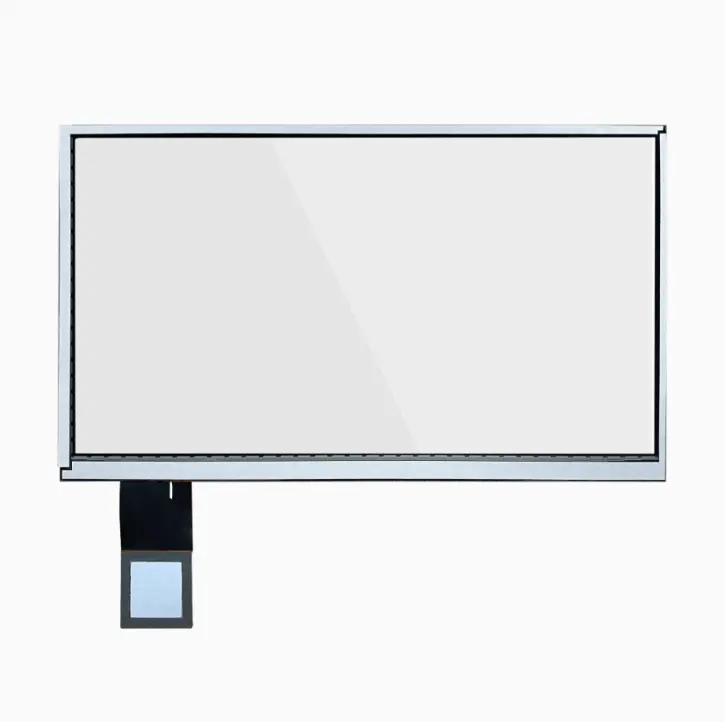
The 10.1-inch capacitive touch panel of FaceLCD is based on a GOODIX GT911 controller with an I2C interface and 5-point touch functionality. The panel has a robust G+G glass structure, 7H surface hardness, and operating temperature of -20 C to 70 C, which is applicable in industrial HMIs and automation displays.
Resistive touch solutions are still used where operators use gloves or in harsh environments. Advantages include:
• Lower cost
• Glove compatibility
• Stable performance in contaminated conditions.
Industrial displays can be used to support a broad range of automation applications.
CNC operators rely on bright displays to:
• Tool positioning
• Program execution
• Diagnostic information
• Production monitoring
Robotic systems need visual interfaces to:
• Motion control
• System configuration
• Error reporting
• Performance analysis
Displays are used in packaging lines:
• Label verification
• Batch tracking
• Machine status monitoring
Control cabinet displays give the operators access to:
• Electrical system status
• Sensor information
• Production metrics
The display is used in assembly lines to enhance the visibility of the workflow and ensure quality production.
The choice of display should be considered. When comparing an industrial LCD monitor or an industrial display module, take into account:
• Display size
• Resolution
• Brightness
• Touch technology
• Interface compatibility
• Operating temperature
• Environmental protection
• Expected lifespan
An industrial display with a high resolution enhances readability and allows visualizing the data in a more detailed way. In the meantime, an anti-glare LCD panel minimizes reflections and improves the comfort of viewing.
Each automation project is different. A custom LCD panel is favored by many manufacturers to use in automation equipment, to suit a particular operational requirement. Customization options can often include:
• Custom screen sizes
• Specialized touch sensors
• Optical bonding
• Waterproof designs
• Custom interfaces
• Protective cover glass
The collaboration with a manufacturer of an experienced industrial LCD panel or OEM LCD supplier will be beneficial in terms of compatibility and long-term reliability.
FaceLCD offers tailored industrial display systems, TFT LCD modules, capacitive touch panels, and embedded display systems for automation systems.
Industrial automation is moving faster than ever. With the increasing smartness of factories, the role of selecting the appropriate LCD panel to be used in automation equipment is increasingly becoming significant. Whether it is a PLC HMI display system and automation control system display platform or a high-level industrial computing display solution, the appropriate screen can boost productivity throughout the whole operation.
Ready to construct a more trustworthy automation system? Learn about FaceLCD custom industrial display solutions and find out how new state-of-the-art TFT LCD technologies can be used to develop smarter, faster, and more efficient industrial equipment in the next generation of manufacturing.