
FaceLCD Hong Kong Limited
Tel: +8615818692944
E-mail: sales@facelcd.com
Address: 13F, Buiding B, Colorful Tech Park, Guanlan High tech park, Longhua Dist, Shenzhen,China ZIP code 518100
You are here: Home > Technology >
Medical technology has been developing at an unbelievable rate. From portable patient monitors to advanced diagnostic systems, all devices are based on clear and reliable visual information. The LCD screen of medical device applications is at the core of these systems, and it is a vital element that assists healthcare professionals in making quick and correct decisions.
Medical equipment is used in an environment where precision is important, unlike consumer electronics. Physicians, nurses, and technicians rely on precise visual information on a second-by-second basis. A medical device LCD should offer:
• High image clarity
• Consistent brightness
• Long operational life
• Reliable touch functionality
• Low power consumption
• Compliance with medical industry requirements
These characteristics will make a medical LCD screen work well in hospitals, laboratories, emergency rooms, and mobile healthcare systems.
When choosing an LCD Screen for Medical Device, several technical considerations should be made.
A high-resolution LCD screen provides better images and more information. This is especially so with:
Medical workers frequently have to recognize minute visual cues that can affect the diagnosis and treatment choice.
The brightness of the LCD is high, which means that it is readable in different light conditions. Most healthcare settings have intense lighting overhead. The LCD screen is of high contrast to ensure that the important information is clearly visible.
Features such as:
An LCD with a wide viewing angle allows several medical workers to see the information at the same time. This is particularly useful in operating rooms and in the care of patients.
Modern medical devices have become touch-interactive. A touchscreen LCD monitor makes navigation easier and enhances the efficiency of workflow. There are two common touch technologies:
A capacitive touch LCD offers:
• Multi-touch support
• Smooth user interaction
• High sensitivity
• Excellent optical clarity
Such displays are usually located in sophisticated medical touchscreen monitor systems.
A resistive touch LCD is still used in healthcare settings where it is common to use gloves.
Benefits include:
• Reliable operation with gloves
• Lower cost
• Strong environmental resistance
The decision will be based on the medical equipment needs.
The LCD technology is presently utilized in many devices in the healthcare industry.
Continuous monitoring of the vital signs of a patient shows:
• Heart rate
• Oxygen saturation
• Blood pressure
• Respiratory rate
An effective LCD in patient monitor applications will guarantee real-time display and proper monitoring.
Ventilator systems have a high-performance LCD that is used to observe the parameters of airflow and the conditions of patients. Equally, an anesthesia machine LCD will facilitate safe surgery practices by clearly presenting vital information.
A portable medical device display must combine:
• Compact size
• Poor LCD performance (low power).
• Lightweight construction
• Long battery life
This renders TFT technology suitable for mobile healthcare solutions.
Manufacturers of medical equipment tend to focus on certain technical features. Important specifications include:
• LCD screen design that is energy efficient.
• Wide temperature LCD operation
• Long-life LCD module assembly.
• EM-resistant display technology.
• Full color LCD.
• HD medical display performance.
Numerous devices can be used over years. Consequently, reliability is equally significant as the quality of the image.
Each medical device has its own requirements. This is the reason why custom LCD screen solutions and medical display module customization are becoming more popular among manufacturers. Some of the customization options are:
• Screen size
• Touch technology
• Interface selection
• Brightness levels
• Cover glass design
• Optical bonding
• Mechanical dimensions
FaceLCD is also used in the development of customized displays for healthcare equipment manufacturers that are interested in specialized display solutions. They have a wide range of products such as TFT LCDs, touch panels, and embedded display products that are used in industrial and medical settings.
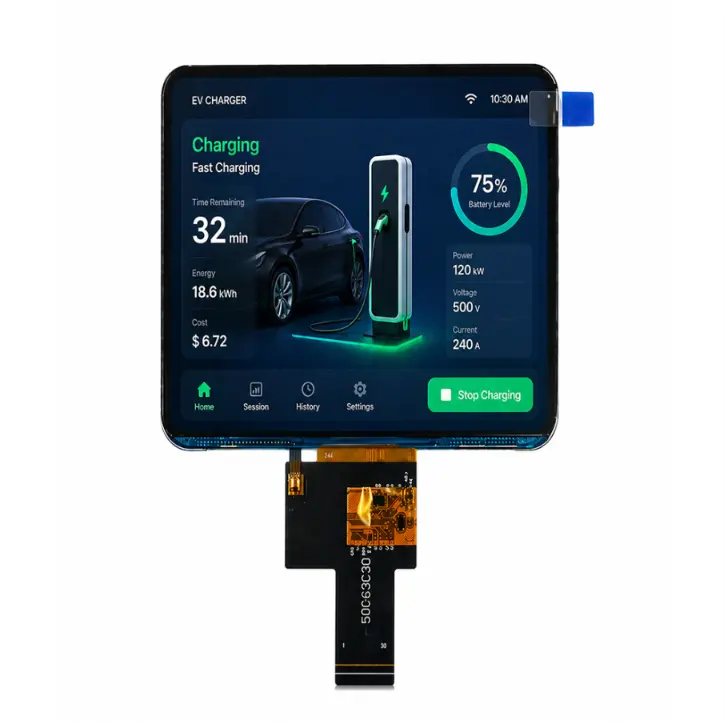
An example of the FaceLCD portfolio is the 5-inch square TFT LCD, which has:
• 720 × 720 resolution
• TFT-LCD technology
• 450 nits brightness
• Anti-glare surface treatment
• MIPI DSI interface
• In-cell touch capability
• Wide 85° viewing angles
• Working temperatures -20C to 70C.
These features render it applicable to healthcare control panels, portable diagnostic systems, medical HMI display applications, and small healthcare equipment interfaces. In embedded medical systems that need to have balanced screen layouts and touchscreen interaction, this display will provide a viable solution without compromising on visual performance.
The effectiveness of a medical device is as good as the information it conveys. The correct display can enhance the workflow, promote clinical accuracy, and improve the overall user experience. The choice of a high-quality LCD Screen for Medical Device is not just a hardware choice, but a choice that has a direct effect on healthcare performance.
Looking to develop your next healthcare product with a reliable display partner? Learn more about the latest medical-grade TFT display solutions offered by FaceLCD and learn how a custom-designed screen can make your medical innovations a reality.