
FaceLCD Hong Kong Limited
Tel: +8615818692944
E-mail: sales@facelcd.com
Address: 13F, Buiding B, Colorful Tech Park, Guanlan High tech park, Longhua Dist, Shenzhen,China ZIP code 518100
You are here: Home > Technology >
With the shrinking, lighting, and increasing power of electronic devices, display technology must keep pace. One of the most viable solutions to the current products that require visual clarity but do not add bulk has been a slim LCD. In mobile devices and industrial tools, as well as smart homes and medical devices, manufacturers are moving towards slim display technologies to develop slick, efficient, and user-friendly products.
The trend of thin electronic products is still on the rise in various industries. A thin LCD enables engineers to make products thinner without compromising the functionality or image quality.
Key advantages include:
• Lightweight construction
• Reduced installation space
• Improved product aesthetics
• Lower power consumption
• Enhanced portability
• Better thermal management
A space-saving LCD will fit into a small enclosure, whether you are creating a wearable device or a control panel in an industrial application, and it will give you a professional look.
In contrast to conventional displays, a thin LCD screen incorporates optimized panel designs, thinner backlight systems, and smaller electronic display elements.
Common features include:
• Ultra-thin module design
• Thin bezel LCD assembly
• High pixel density
• Advanced LED backlighting
• Low-profile LCD panel architecture
• Flexible interface support
A large number of current slim LCD modules are also capable of supporting touch functionality, and are thus appropriate in interactive applications.
The introduction of IPS LCD technology is one of the largest advancements in modern display solutions. The IPS TFT LCD screen has:
• Large screen LCD performance.
• More accurate color reproduction
• Better contrast stability
• Reduced color shifting
• Improved readability from different positions
This renders slim IPS LCD solutions ideal in industrial displays, medical equipment, automotive systems, and commercial products where many people might be using the screen at the same time.
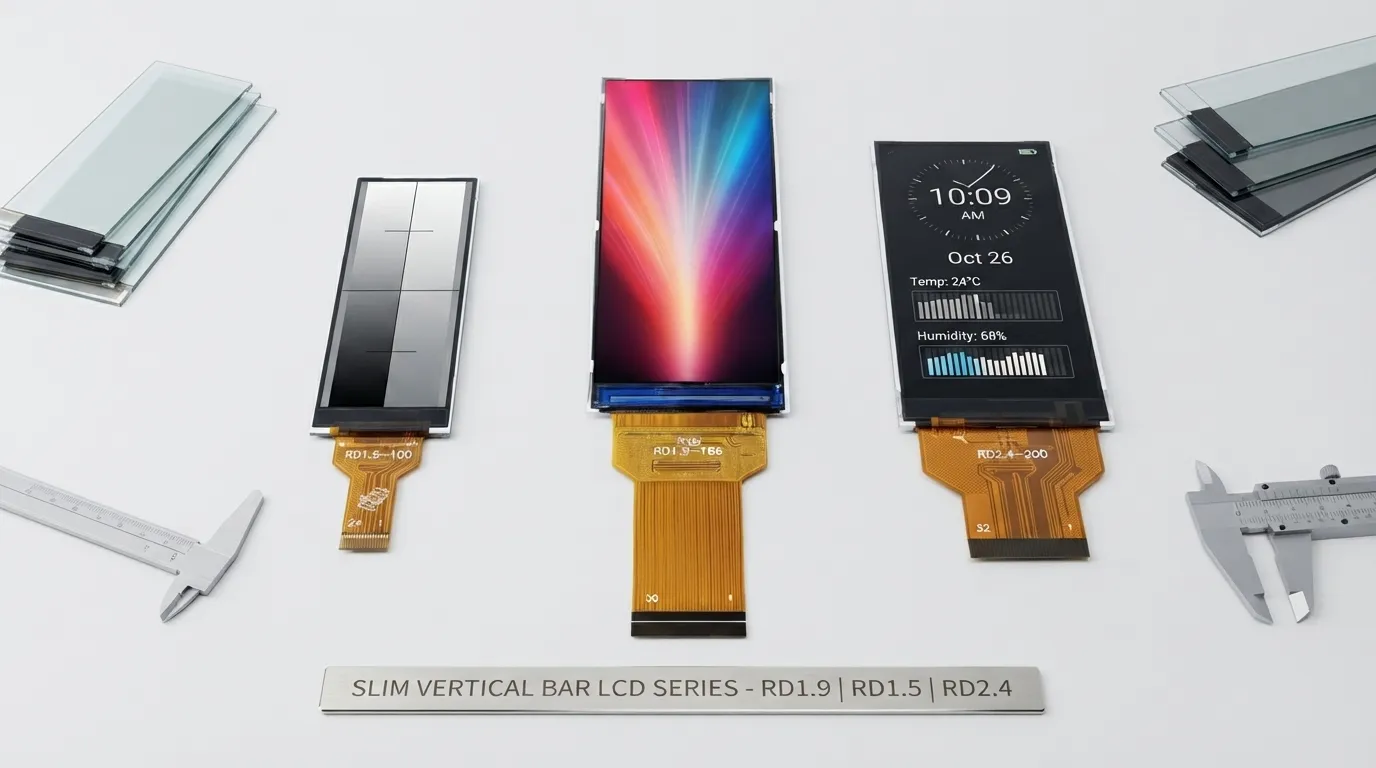
One of the best instances of slim display engineering is the 2.86-inch IPS LCD Display that can be purchased at FaceLCD. This is a very small display that integrates a small size with great visual performance. It has a resolution of 376 x 960, IPS viewing technology, and a MIPI interface that allows high-speed transmission of data. The module has an exceptionally slim profile of about 2.4 mm and provides clear and vivid pictures. It has an ST7701 driver IC, supports all-direction viewing, and can be used at temperatures between- 20 °C and 70 °C; hence can be used in industrial and portable applications.
In choosing a slim TFT LCD, the engineers usually consider some significant specifications.
The current displays come in different resolutions, which include:
• HD LCD screens.
• LCD panel designs of high-resolution.
• Custom pixel configurations
• LCD in full color.
Increased resolutions produce sharper text, smoother graphics, and enhanced user experiences.
Outdoors or brightly lit settings require a high-brightness LCD. The brightness is usually in the range of:
• 300 nits on indoor devices.
• 1000+ nits for sunlight-readable systems.
Low-power LCDs can be used to increase battery life in portable electronics, wearables, and Internet of Things products.
IPS technology usually offers viewing angles of up to 178 degrees, which means that the content is always visible from almost any direction.
A custom slim LCD can be used in numerous industries due to its versatility.
It can be used as an industrial display and can serve as:
Industrial environments often require rugged performance, wide temperature ranges, and long operating lifespans.
An LCD medical display supports:
• Diagnostic instruments
• Monitoring systems
• Portable medical devices
• Laboratory equipment
Clear visibility and accurate color reproduction are critical in healthcare settings.
Manufacturers increasingly use:
These screens offer easy control of devices connected to them.
The current IoT products are based on:
A small LCD is ideal in space-constrained designs due to its small size.
A lot of manufacturers are integrating a thin color LCD screen with touch. Available options include:
• Capacitive touch LCD
• Resistive touch LCD
Capacitive technology has smooth multi-touch functionality, whereas resistive touch can be used in rough industrial settings where gloves might be necessary.
FaceLCD, being a reputable slim LCD supplier, offers a complete display ecosystem that encompasses TFT displays, touch panels, LCD driver boards, and customization services. The company sponsors projects in the field of consumer electronics, industrial automation, medical devices, transportation systems, and smart home products. FaceLCD offers experience in display matching, interface integration, touch solutions, and custom engineering to minimize the risks in development and to speed up the deployment of products.
The role of advanced display technology is further enhanced as products keep on shrinking in size and becoming more interconnected. The ultra-slim and thin LCD panel has been chosen carefully to provide the visual performance that users desire and also assist manufacturers in producing thinner, lighter, and more appealing products.
Need to upgrade your next project? Contact FaceLCD to design your own display, professional engineering services, and high-quality slim display modules that are tailored to suit the needs of the new electronics.