
FaceLCD Hong Kong Limited
Tel: +8615818692944
E-mail: sales@facelcd.com
Address: 13F, Buiding B, Colorful Tech Park, Guanlan High tech park, Longhua Dist, Shenzhen,China ZIP code 518100
You are here: Home > Technology >
FaceLCD’s LCD display optical bonding service helps OEM and ODM buyers combine the LCD module, touch panel, and cover glass into a more integrated display assembly. Instead of sourcing each component separately and discovering dimensional or compatibility problems during final assembly, buyers can have the complete display stack reviewed before sampling.
As a custom display manufacturer, FaceLCD can coordinate the LCD, touch structure, cover-glass design, FPC direction, connector position, bonding requirements, and housing fit within one project. This approach can reduce internal reflection, improve the appearance of the finished screen, and lower the risk of dust or condensation forming inside an open air gap.
Request an optical bonding feasibility review by sending your LCD model, drawings, application requirements, and expected order quantity.
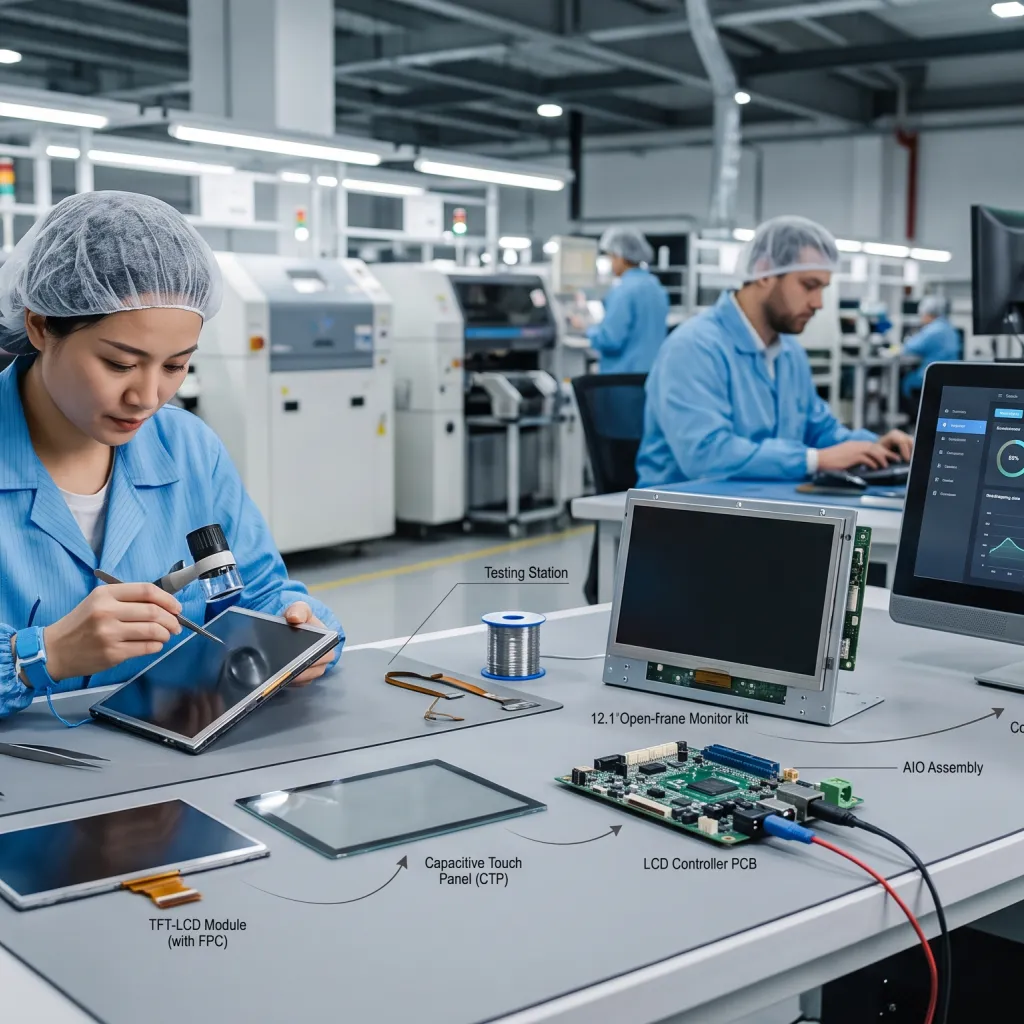
FaceLCD provides optical bonding as part of its custom LCD and touch-display manufacturing capability. The service is intended for industrial equipment, kiosks, automotive electronics, medical devices, smart-home controls, inspection systems, and other products that need a clear and integrated front display assembly.
Depending on the confirmed project structure, the service may include:
FaceLCD can also review whether the selected LCD, touch panel, and cover glass are suitable for the intended housing. This is important because a bonded display is not just a panel with adhesive between the layers. The dimensions, visible area, glass thickness, printed border, cable position, touch controller, and mechanical stack-up must work together.
Send your LCD model and mechanical drawing to begin the project review.
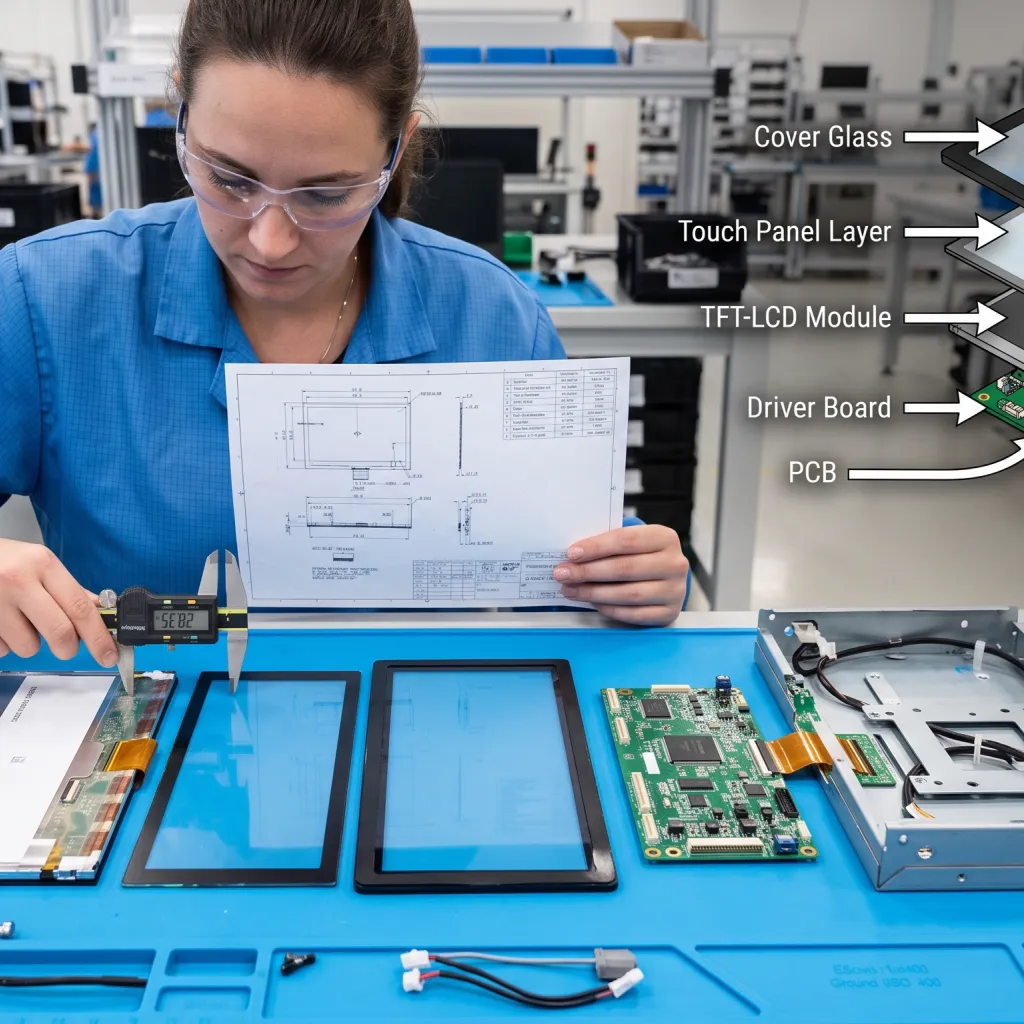
A reliable bonded display starts with a complete engineering review. FaceLCD evaluates the display components and application requirements before confirming feasibility and preparing a sample.
The LCD and touch panel must match mechanically and functionally. FaceLCD reviews details such as:
If the buyer already has a specified LCD or touch-panel model, the relevant datasheet and mechanical drawing should be submitted. FaceLCD can also review whether another component needs to be matched with the selected display.
The cover glass affects appearance, touch performance, bonding feasibility, and housing fit. The review may include:
A small error in the viewing window or printed border can cover part of the LCD active area or create visible misalignment. Incorrect glass thickness may also affect capacitive touch sensitivity. Reviewing these details before sampling helps prevent unnecessary tooling changes and repeated prototypes.
The same bonded display structure may not suit every environment. FaceLCD therefore needs to understand how and where the product will be used.
Important requirements include:
| Buyer Input | Example Information | Why FaceLCD Needs It |
|---|---|---|
| LCD information | Model number, datasheet and drawing | Confirms display dimensions and characteristics |
| Touch requirements | Capacitive or resistive touch, interface and controller | Confirms compatibility and functionality |
| Cover-glass drawing | Size, thickness, printing and viewing window | Confirms bonding structure and front-panel fit |
| Mechanical stack-up | Layer dimensions and housing section | Identifies interference and alignment risks |
| Application environment | Indoor, outdoor, vehicle, medical or industrial use | Guides material and validation review |
| Quantity | Samples, pilot order and estimated annual demand | Supports sample and production planning |
| Test requirements | Appearance, touch, environmental or reliability checks | Defines acceptance requirements |
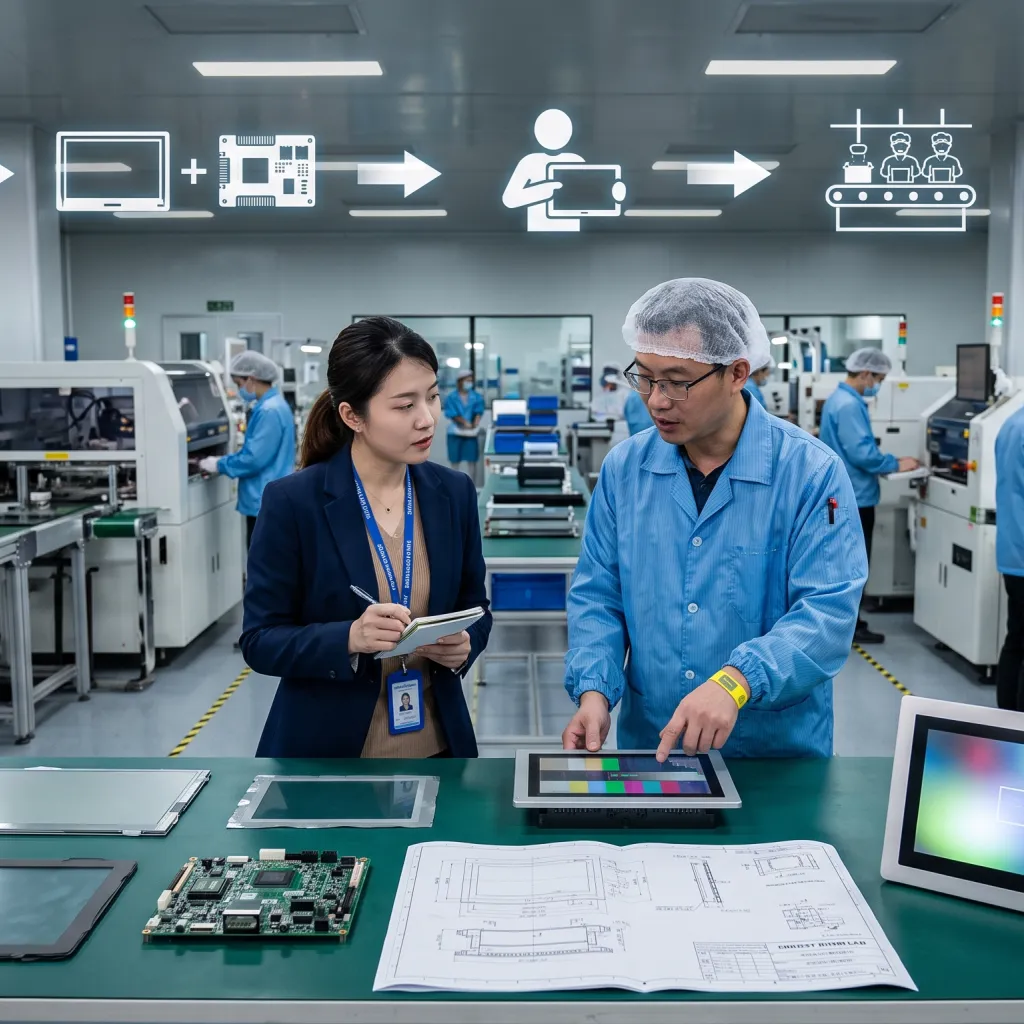
The process begins with the LCD information, touch requirements, cover-glass drawing, mechanical design, application environment, and expected quantity.
FaceLCD reviews the available information, identifies missing specifications, and checks whether the requested assembly can move to a detailed feasibility review.
The LCD, touch panel, cover glass, FPC, connector, and housing dimensions are reviewed as one display stack.
This stage confirms:
Any drawing conflicts should be corrected before bonding materials or samples are prepared.
The bonding structure and production method are selected according to the approved display stack, component materials, size, environmental requirements, and required performance.
The exact bonding material and process depend on project feasibility. Buyers with specific adhesive, curing, temperature, optical, or reliability requirements should include them in the initial enquiry.
After the drawings and project requirements are confirmed, FaceLCD prepares the bonded sample.
The sample represents the approved component combination, including the LCD, touch panel, cover glass, printing, connector arrangement, and bonding structure. It allows both sides to evaluate the assembly before trial or mass production.
The bonded sample may be checked for:
Any additional environmental, mechanical, optical, or reliability tests should be agreed before sampling.
After the sample is approved, the confirmed drawings, components, and project requirements should be locked for production.
If the LCD model, touch panel, cover glass, adhesive requirement, or housing design changes later, the bonded assembly may need another review. Controlling these changes helps maintain consistency between the approved sample and repeat production.
Requirement Review → Stack-Up Confirmation → Bonding Feasibility → Sample → Inspection → Approval → Production
An air gap between the LCD and front layer creates additional reflective surfaces. Optical bonding fills this space with transparent bonding material, which can reduce internal reflection and improve the apparent contrast of the display.
This can be valuable in bright indoor environments, outdoor terminals, vehicle displays, and equipment where operators must read information quickly.
Bonding the display layers creates a more unified front assembly. This can improve the overall screen feel and help the display withstand repeated handling or mechanical stress.
The final durability still depends on the LCD, glass type, glass thickness, housing, bonding material, mounting structure, and validation requirements.
A traditional air-bonded assembly leaves an open space between the LCD and front layer. Under certain environmental conditions, dust or condensation may become visible within this area.
Optical bonding removes the open gap between the bonded layers. However, it does not automatically make the complete product waterproof. Housing seals, connectors, enclosure design, and product-level testing must also be considered.
Removing the visible gap can make the image appear closer to the front glass. It can also create a more integrated touch-display appearance.
Touch performance must still be reviewed against glass thickness, touch-controller settings, glove requirements, wet-touch conditions, printed borders, and the final housing design.
Optical bonding alone does not guarantee sunlight readability, waterproofing, impact resistance, or a specific IP or IK rating. LCD brightness, cover-glass treatment, sealing, housing design, touch structure, and product testing must be reviewed together.
| Application | Typical Project Need | Details to Confirm |
|---|---|---|
| Industrial HMI | Clear data viewing and repeated operation | Glove use, temperature, vibration and housing |
| Outdoor terminal or kiosk | Bright ambient light and public interaction | LCD brightness, glass treatment, sealing and impact |
| Automotive display | Integrated appearance and environmental reliability | Temperature, vibration, sunlight and lifetime |
| Medical equipment | Clear viewing and an integrated front surface | Optical requirements, cleaning and documentation |
| Inspection equipment | Detailed image or measurement viewing | Resolution, contrast, colour and viewing angle |
| Smart-home control panel | Thin glass-front touch interface | Touch controller, glass, printing and housing fit |
| Commercial terminal | Repeated public use and branded cover glass | Glass strength, touch performance and production volume |
Each application should be reviewed individually. A bonded display suitable for an indoor control panel may not automatically meet the requirements of a vehicle, outdoor kiosk, or medical device.
FaceLCD is a display manufacturer rather than a general component reseller. The company has worked in LCD manufacturing since 2009 and operates factories in Shenzhen and Dongguan.
Its product and service scope includes TFT-LCD modules, touch panels, LCD driver boards, open-frame monitors, custom cover glass, and complete display assemblies. This allows buyers to coordinate more of the project through one manufacturing partner.
Key advantages include:
This integrated approach is useful when the buyer needs more than a standalone bonding supplier. FaceLCD can review the complete display assembly and identify potential compatibility problems before the product reaches final installation.
To receive a useful feasibility review and quotation, provide as much of the following information as possible:
Incomplete information does not always prevent an initial discussion, but confirmed drawings and component details are normally required before sample production.
Air bonding may remain suitable for cost-sensitive indoor equipment where reflection, contamination inside the gap, and front-assembly strength are not major concerns.
Optical bonding is more relevant when the project requires reduced internal reflection, clearer viewing, a more integrated structure, or lower risk of visible dust and condensation between the display layers.
The final choice should be based on the application environment, LCD brightness, touch structure, cover glass, housing, production quantity, and validation requirements. A detailed optical bonding versus air bonding comparison should be used when the bonding method has not yet been selected.
FaceLCD can review LCD and touch-panel bonding projects based on the selected display model, touch structure, dimensions, FPC position, interface, cover glass, and application requirements. Send both component drawings for compatibility review.
Yes, custom cover-glass requirements can be reviewed as part of the project. Important details include outer dimensions, thickness, transparent window, printed border, logo printing, edge design, and housing fit.
Provide the LCD datasheet, LCD drawing, touch-panel requirements, cover-glass drawing, mechanical stack-up, application environment, required quantity, and testing requirements. Existing housing drawings should also be included when available.
A sample can be produced after the component structure, drawings, bonding requirements, and commercial terms are confirmed. The sample should be inspected and approved before trial or volume production.
Optical bonding can help reduce internal reflection and improve the integrated display structure. Outdoor performance also depends on LCD brightness, contrast, cover-glass treatment, operating temperature, sealing, housing design, and environmental validation.
Inspection can include display operation, touch response, alignment, appearance, bubbles, contamination, edge condition, printing, dimensions, FPC position, and connector position. Additional tests should be defined before sampling.
FaceLCD can review your LCD module, touch panel, cover glass, bonding structure, connector arrangement, and housing requirements as one display project.
Send your LCD model or datasheet, mechanical drawings, application environment, sample quantity, estimated production volume, and required testing to request an optical bonding feasibility review, bonded sample, or OEM/ODM quotation.