
FaceLCD Hong Kong Limited
Tel: +8615818692944
E-mail: sales@facelcd.com
Address: 13F, Buiding B, Colorful Tech Park, Guanlan High tech park, Longhua Dist, Shenzhen,China ZIP code 518100
You are here: Home > Technology >
Electronic gadgets are getting smarter, more graphic, and far more user-friendly. It can be a smart home controller, industrial automation panel, medical monitor, or an IoT device, but the display is frequently the first thing the user interacts with. This is where an LCD module for embedded system projects plays a very important role.
A properly designed display will make a simple embedded device look like an easy-to-use and professional product. From small monochrome displays to the latest TFT LCD modules with touch capabilities, the current display technologies have given the engineer an unlimited number of choices in developing responsive user interfaces. FaceLCD offers a variety of display solutions to the industrial, commercial, and embedded markets.
Embedded systems are created to carry out specific tasks effectively. Nonetheless, users are not able to retrieve information promptly without a visual interface. A built-in LCD module offers:
• Real-time data visualization
• User-friendly control interfaces
• Interactive touch functionality
• Improved product aesthetics
The current LCDs of embedded systems have high resolutions, rich colors, wide viewing angles, and various communication interfaces, making them applicable in consumer electronics as well as industrial equipment.
Not all displays are built the same. The correct option will be based on the environment of your application, processor capabilities, and interface requirements.
The TFT LCD module is still among the most popular embedded products. Key advantages include:
• Fast refresh rates
• Excellent image quality
• Full-color graphics
• High contrast ratios
• Support for touch integration
An embedded systems TFT LCD is typically found in industrial control, smart appliances, medical devices, and handheld devices.
An IPS LCD panel has much better viewing angles than a traditional TN panel.
Benefits include:
• Up to 178 degrees of viewing.
• Better color consistency
• Enhanced readability
• Superior image accuracy
The displays are suited to embedded HMI display applications where there are multiple users who can view the display at various positions.
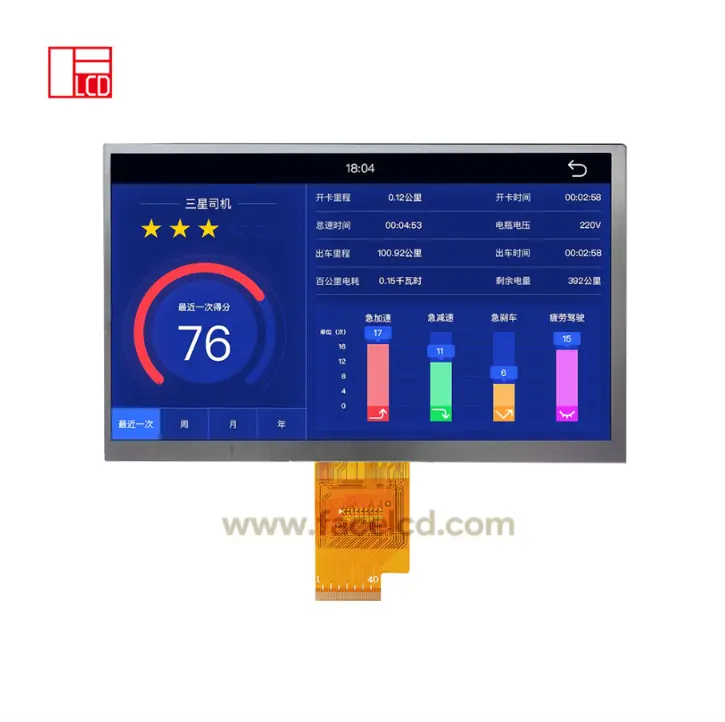
The ability to be used with modern development platforms is one of the reasons why embedded displays have become so popular.
Popular options include:
• LCD board STM32.
• LCD module ESP32.
• LCD module for ARM processor
• Display module for SBC
• LCD module for microcontroller
These solutions facilitate flexible development environments and speed up product prototyping.
Many devices are now expected to have touch interfaces. An embedded touchscreen display can use either:
A capacitive touch LCD offers:
• Multi-touch support
• Smooth user experience
• High sensitivity
• Smartphone-like operation
A resistive touch LCD offers:
• Lower cost
• Stylus compatibility
• Dependable performance under extreme conditions.
• Improved performance using gloves.
The decision between the two will depend on the need to be used.
Visual interfaces are important in modern industries.
An LCD industrial module assists operators in keeping track of equipment performance and production data.
Common uses include:
• PLC interfaces
• Factory control panels
• Machine monitoring systems
• Process visualization
A medical device LCD is a high-quality and reliable display of critical information.
Applications include:
• Patient monitoring systems
• Diagnostic equipment
• Portable medical devices
A smart home LCD device enables users to manage lighting, climate, and security capabilities via user-friendly interfaces.
IoT devices have an LCD module that offers real-time status, sensor information, and remote control of management.
Businesses frequently use:
These applications need to be durable, readable, and responsive to touch.
There are a few important specifications that engineers should consider when choosing the most suitable LCD module to use with embedded systems.
Increasing resolutions enhances the quality of the graphical and user experience. The typical embedded resolutions are:
• 800 × 480
• 1024 × 600
• 1024 × 768
• 1280 × 800
A bright LCD module has high brightness and enhances visibility in bright conditions. Certain industrial displays have more than 1000 nits to work outdoors.
A sunlight-readable LCD module is an enhanced backlighting and optical technology LCD module that is readable in direct sunlight.
Industrial products frequently have to be run between -20 °C and 70 °C or broader. The LVDS displays of FaceLCD can be used in harsh conditions as they meet the temperature needs of industries.
An LCD with low power consumption will increase battery life and decrease the total system energy consumption.
Numerous manufacturers need application-specific displays. An application-specific LCD module can consist of:
• Custom dimensions
• Specialized interfaces
• Touch integration
• Optical bonding
• Enhanced brightness
• Protective cover glass
These tailored solutions are useful in developing unique products without compromising on performance and reliability.
Before choosing a display, consider:
• Required resolution
• Viewing angle requirements
• Interface compatibility
• Touchscreen needs
• Operating temperature range
• Brightness requirements
• Power consumption
• Product lifecycle availability
The embedded graphics display ought to be right not only to meet technical needs but also to long-term manufacturing objectives.
In the modern globalized world, a screen is much more than a display. It is the medium of communication between technology and people. You may require a smart LCD module, an industrial TFT LCD, an RGB LCD, or a full display solution for embedded systems, but selecting the appropriate technology can radically enhance the performance of a product and its user satisfaction.
When you are coming up with next-generation embedded products, it is time to invest in a display partner that you can trust.
FaceLCD provides state-of-the-art TFT displays, touch solutions, LVDS modules, and custom display technologies to satisfy the needs of embedded applications. Go to FaceLCD and find the ideal display solution that makes your innovation come true.