
FaceLCD Hong Kong Limited
Tel: +8615818692944
E-mail: sales@facelcd.com
Address: 13F, Buiding B, Colorful Tech Park, Guanlan High tech park, Longhua Dist, Shenzhen,China ZIP code 518100
You are here: Home > Technology >
Modern vehicles are becoming increasingly digital. From instrument clusters and infotainment systems to digital rearview mirrors, all sorts of displays create interfaces between systems and drivers or passengers.
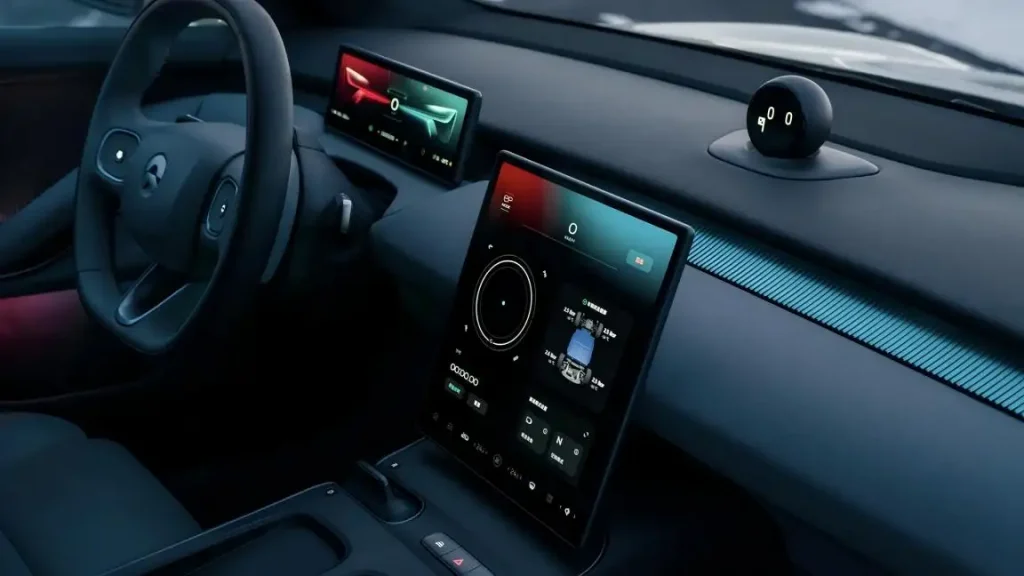
Automotive displays do employ the same TFT LCD technology as tablets and cell phones, but the circumstances under which they operate are very different. While a cell phone functions under a controlled setting, an automotive LCD screen has to endure extreme temperatures, constant vibration, direct sunlight and hours of daily use for years.
This is the meaning of "automotive-grade." An LCD screen for an automotive display is not a regular LCD screen thrown into a car. It is designed for different reliability and stronger optics, as well as mechanical and chemical stability for a greater design life.
When compared with consumer displays, automotive LCD screens maintain defined and constant performance for the life of the vehicle. Many factors determine whether a display meets automotive requirements.
For the reason stated above, automotive LCD screens experience extreme temperature variations. For example, dashboards can reach extreme temperatures when exposed to sunlight. Degree ranges for the operation of automotive displays is generally defined as between -30°C and +85°C for various application needs.
Special design elements for LCD screens and driver ICs help combat the effects of extreme temperature variations. In addition, special design elements can combat other effects such as slow response times when the screen is exposed to low temperatures and high image distortion when exposed to high temperatures.
Automotive displays endure constant road vibrations and mechanical shocks as a result of design limitations.
Manufacturers implement reinforced module structures, frame designs with a higher degree of strength, bonding technologies, and flexible circuitry connections to minimize the occurrence of circuit disruptions, connection breaks, or signal quality issues.
Vehicle displays must remain readable even under the direct sun. Mainstream displays fail to respond with good contrast and reflections under bright sunlight.
Automotive LCD displays are generally required to have high brightness levels in the range of 700-1,200 cd/m² or more, and in combination with:
• Surface Treatment to Reduce Glare
• Anti-Reflective Coating
• Optical Bonding
• High Contrast TFT Panels
These technologies enhance the visibility while limiting reflections within the vehicle.
Unlike smart devices that are replaced often, automotive displays must function for many years without replacement.
TFT LCD modules for vehicles are designed with robust LED backlights and with stable driving electronics. Many displays of an industrial and automotive nature are designed for 50,000 hours of life and greater, depending on the driving conditions and brightness.
Modern vehicles have many electronic systems and have communication modules, sensors, cameras, and control units.
To be operational amongst a plethora of electronic systems, automotive LCD screens must inhibit the generation of electromagnetic fields while maintaining stable functionality. This requires a careful design of the printed circuit board, along with necessary shielding and component selection.
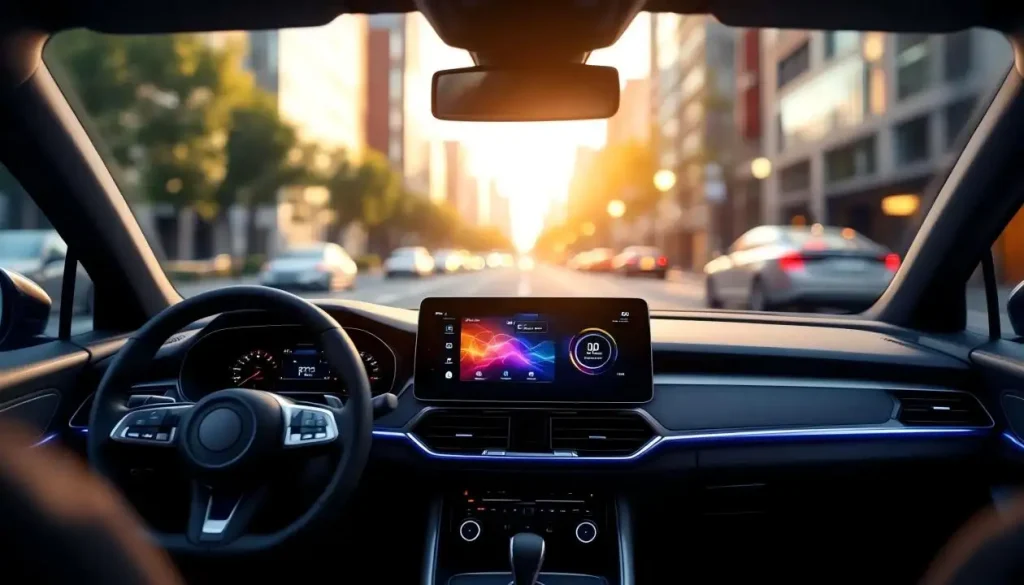
TFT LCD technology is the most used display technology in the transportation industry due to a combination of high quality images, flexible customization options and high reliability.
Among various display applications, instrument clusters present the highest safety challenges. TFT LCDs offer crisp illustrations of:
• Vehicle Velocity
• Status of Electric Vehicle Charge
• Driver Assistance Alerts
• Cautionary Alerts
• Guidance
The information relayed to the driver must be accurate and timely, and therefore, the highest levels of response and readability are necessary.
Both infotainment and passenger systems require exceptional performance with touch, stable, and high-resolution displays.
Some applications include:
• Passenger entertainment systems
• Displays located in the rear seats
• Passenger information systems in commercial vehicles
• Information displays in rail and air transportation
• Digital rearview mirrors
Digital rearview mirrors utilize camera technology and display the image via an LCD display.
These displays require:
• High brightness for good visibility and low
• High frame rate response time with minimal motion blur
• Low display reflection with wide viewing angles
• Stable image performance given varying lighting
Beyond passenger vehicles, TFT displays are used for:
• Control systems for rail transportation
• Control systems for marine transportation
• Control systems for transportation at airports
• Controls in industrial vehicles
These displays are required to function in a wider range of environmental conditions.
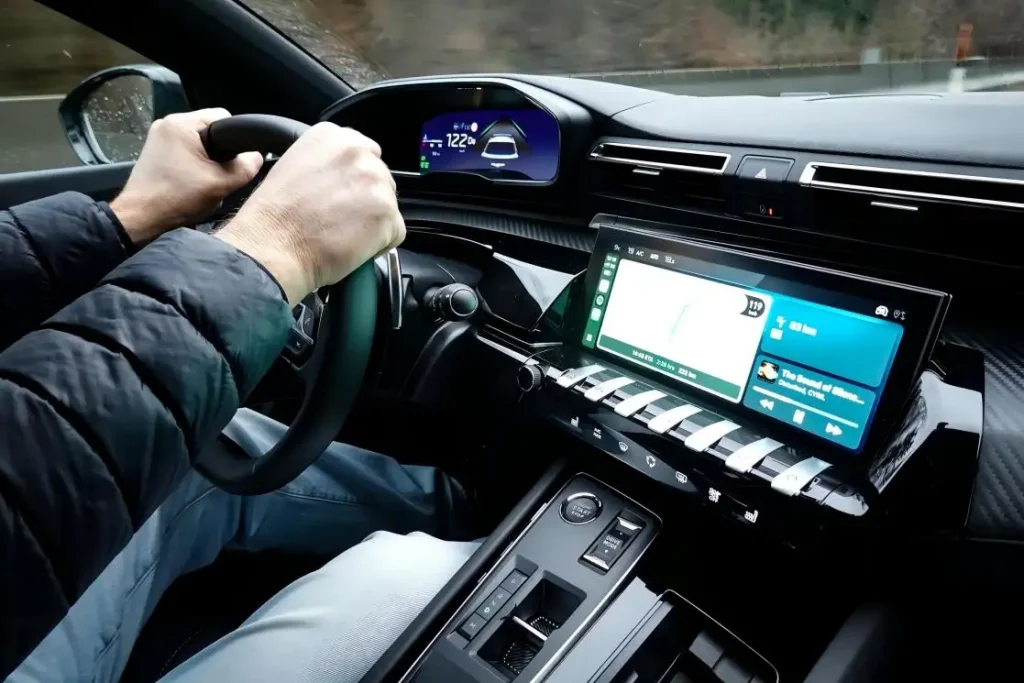
Reliability of displays starts with design beyond the display panel.
Automotive-oriented modules often use
• Reinforcements with metal frames
• Robust bonding structures
• Protected FPC connections
• Enhanced sealing
• Increased moisture sealing
These features improve the module's stability for an extended period.
The optical bonding process removes air gaps between the LCD panel and cover glass.
This process improves:
• Light reflection during the day and the readability of the display.
• The display becomes more rigid and structurally less vulnerable.
• Increased resistance to impacts.
This process is a standard practice in automotive and industrial displays.
Automotive displays require extensive testing in the following areas to ensure their reliability:
• High/low temperature cycling
• Thermal aging
• Vibration testing
• Mechanical shock testing
• Electrical reliability testing
Environmental testing is conducted to identify the failures the product may have prior to starting production on a larger scale.
| Attribute | Consumer LCD | Automotive-Grade LCD Screen |
| Operating temperature | Approx. 0°C to 50°C | Commonly -30°C to 85°C |
| Brightness | 300–500 cd/m² | 700–1,200+ cd/m² |
| Surface treatment | Basic anti-glare or glossy | Anti-reflective, optical bonding options |
| Lifespan | Around 15,000–30,000 hours | Typically 50,000+ hours depending on design |
| Mechanical durability | Limited vibration resistance | Designed for vibration and shock environments |
| Customization | Standard dimensions/interfaces | Customized size, FPC, connector, and optical solutions |
The difference between consumer and automotive displays is not only the LCD panel itself. It is the complete engineering approach behind reliability, integration, and validation.
For companies developing transportation-related products, selecting the right display partner is as important as selecting the panel technology.
FaceLCD provides TFT LCD customization support for industrial and transportation applications, helping customers evaluate:
• Mechanical integration requirements
• Display size and viewing area
• FPC and connector configuration
• Brightness and optical treatments
• Interface compatibility
• Temperature performance requirements
For example, compact TFT modules such as bar-type displays can support applications requiring specialized form factors, while customization options help engineers adapt displays to different product architectures.
High-resolution screens are only one part of an automotive- grade display. These entail the integration of thermal and mechanical resistance as well as optical design and reliable durability.
Due to its ability to withstand and function in the most demanding conditions, TFT LCD technology has become almost essential for automotive instrumentation and transport control.
FaceLCD provides product developers of automotive and transport displays custom-built dependable TFT LCD solutions for advanced automotive applications. It assists in the optimization of display integration and reduction of development risks.
Q1. What differentiates automotive LCD screens from standard LCD screens?
Automotive LCD screens must display reliability over time, be high in brightness and require wider ranges of temperature and resistance to vibration.
Q2. What is the extreme operating temperature for automotive LCD screens?
Depending on the specifications of the application, automotive LCD screens are generally designed to operate at temperatures ranging from -30 °C to +85 °C.
Q3. Why do automotive LCD screens require higher brightness?
Higher brightness is required to maintain the visibility of important information when the screen is exposed to direct sunlight.
Q4. Is it appropriate to use TFT LCD for automotive display applications?
Yes. TFT LCD technology is appropriate for automotive displays due to its ability to produce high quality images and its flexible reliability.
Q5. What optical technologies can enhance the visibility of automotive displays?
Readability and visibility can be improved by optical bonding along with the addition of anti-glare and anti-reflective coatings.