
FaceLCD Hong Kong Limited
Tel: +8615818692944
E-mail: sales@facelcd.com
Address: 13F, Buiding B, Colorful Tech Park, Guanlan High tech park, Longhua Dist, Shenzhen,China ZIP code 518100
You are here: Home > Technology >
What is Liquid Crystal and Why Can It Be Used in Displays?
Liquid Crystal Display: The Technology Behind Your Screen
Liquid crystal displays (LCDs) are everywhere. They are in your TV, computer monitor, smartphone, and tablet. This LCD technology relies on a remarkable material that is neither a solid nor a regular liquid. So, how do liquid crystals make these screens work? Let’s explore the science of the liquid crystal display.

A liquid crystal is a unique state of matter. It flows like a liquid, but its molecules keep some orderly arrangement like a crystal. Think of it as a middle ground between a liquid and a solid. This special structure gives liquid crystals useful optical properties. They can bend light and affect polarized light, which is the key to LCD technology.
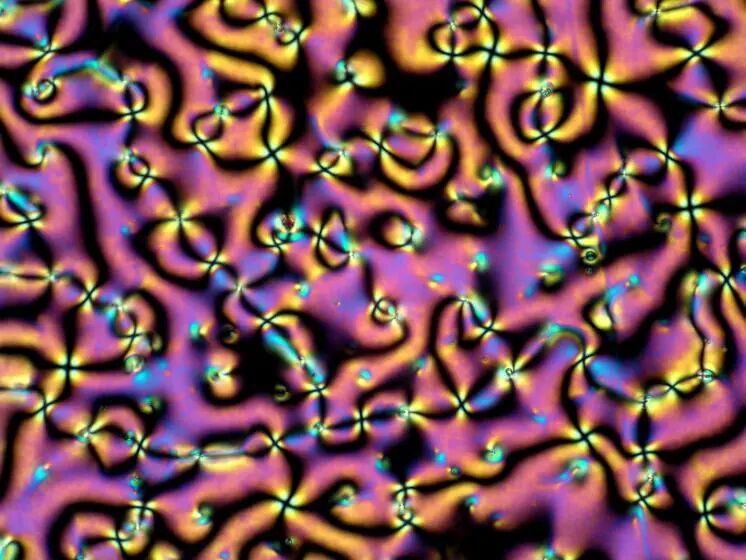
This characteristic of being “ordered but not completely ordered” gives liquid crystal many unique optical properties. For example, they can change the direction of light propagation and have special effects on polarized light. These properties form the core foundation of liquid crystal display technology.
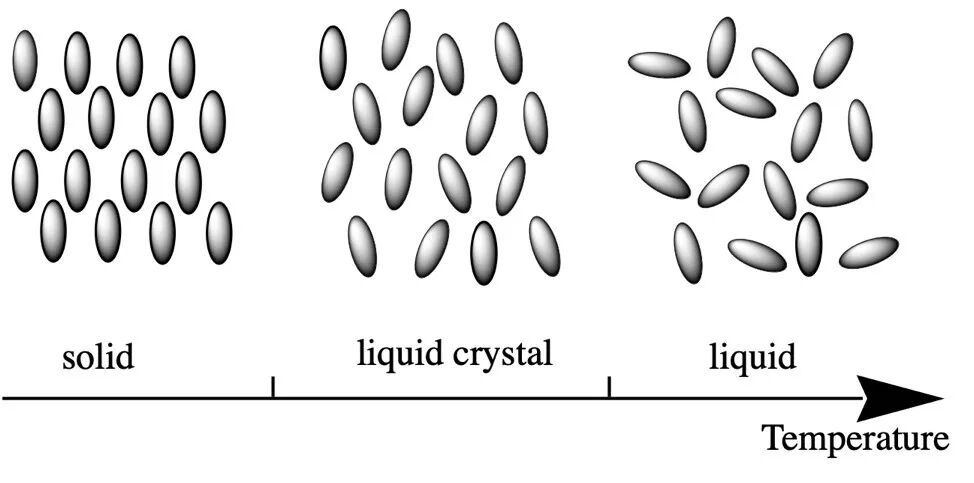
From a physical perspective, liquid crystal is an intermediate state between a liquid and a solid, referred to as the “liquid crystal phase.” When temperature or pressure changes, liquid crystal molecules can transition between different alignment modes. This property is particularly important in display technology because, through external control, the orientation of the liquid crystal molecules can be manipulated, thereby affecting how light passes through the screen.
The discovery of liquid crystal not only revised the traditional understanding of matter states but also laid the groundwork for a series of future applications. However, for a long time, liquid crystal remained merely a “scientific curiosity” in the laboratory. It wasn’t until the mid-20th century, with the discovery of the electro-optic effect of liquid crystals, that humanity truly realized its commercial potential.
Not all liquid crystals are the same. They fall into main categories based on how their molecules arrange themselves.
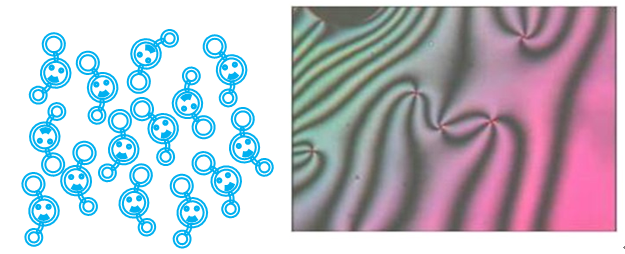
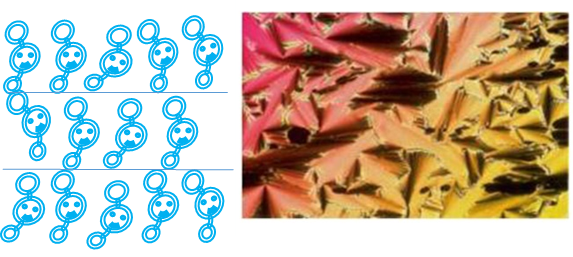
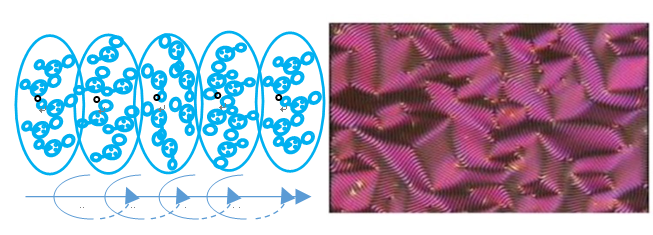
Beyond these three types, there are other more complex liquid crystal structures. However, in displays, nematic liquid crystals are the absolute protagonists. Their flexibility, controllability, and response speed make them ideal materials for LCD screens.
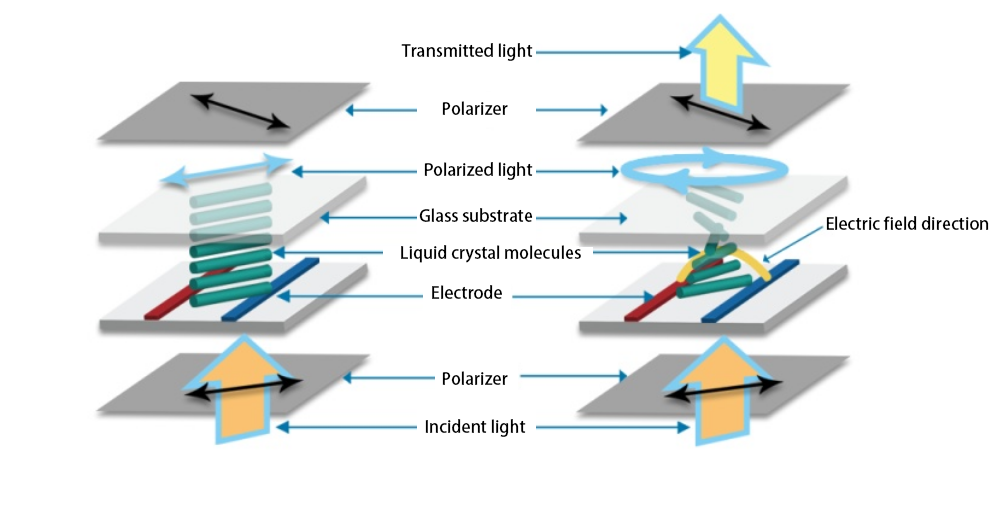
The core function of a liquid crystal display is to control light with electricity. An LCD pixel is a tiny light switch made of liquid crystal.
1. The Basic Light Switch
Each pixel sandwiches liquid crystals between two polarizing filters. Without power, the twisted liquid crystal molecules rotate polarized light, allowing it to pass through the second filter—the pixel looks bright. When you apply a voltage, the molecules straighten up. They stop twisting the light, which the second filter now blocks—the pixel turns dark.
2. Creating Color
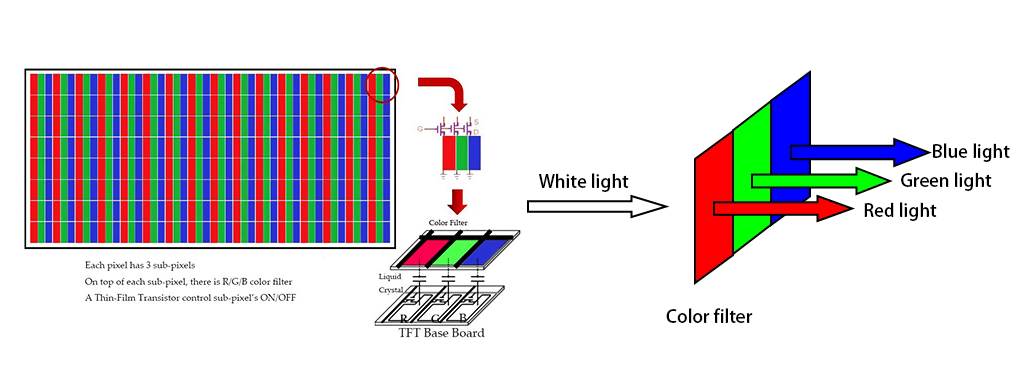
Liquid crystals do not produce light. A white LED backlight shines from behind. To create color, a tiny red, green, or blue color filter sits over each sub-pixel. By controlling the brightness of these three colored sub-pixels, the screen can mix millions of different colors.
3. Making Images and Motion
To show shades of gray or moving pictures, the display precisely controls the voltage for each pixel. A small change in voltage adjusts how much the liquid crystals twist, letting more or less light through. Millions of transistors (TFTs) control these sub-pixels at high speed to form the images you see.
LCD technology transformed how we see information. From a scientific oddity to a world-changing invention, the liquid crystal display shows how controlling light at a microscopic level can create our digital world. The next time you look at a screen, remember the remarkable liquid crystals working inside.