
FaceLCD Hong Kong Limited
Tel: +8615818692944
E-mail: sales@facelcd.com
Address: 13F, Buiding B, Colorful Tech Park, Guanlan High tech park, Longhua Dist, Shenzhen,China ZIP code 518100
You are here: Home > Technology >
Chapter 1: Understanding Transparent Screen Technology
1.1 What Are Transparent Screens?
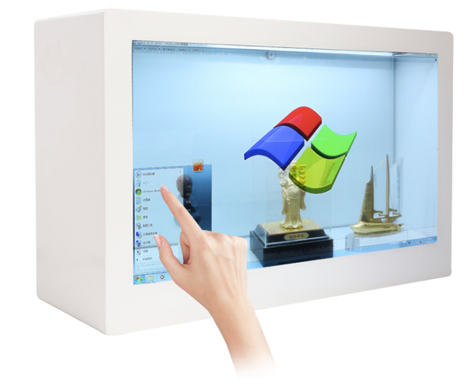
Transparent screens are see-through display devices that enable light transmission. Users can view screen content while clearly seeing background objects. This technology breaks traditional display limitations by blending digital information with physical environments. It represents both a visual presentation revolution and a significant advancement in human-computer interaction.
1.2 Technology Development Timeline
The transparent display concept originated in 20th-century science fiction, with major breakthroughs occurring in the early 21st century. Early experiments used projection systems with translucent films, facing limitations like low brightness and narrow viewing angles. As OLED technology matured, self-emissive transparent displays entered commercialization. Recent Micro-LED advancements now deliver higher brightness, longer lifespan, and better energy efficiency, accelerating industry growth.
1.3 Core Value Proposition
Transparent screens offer "invisible presence" - displaying information when needed while blending into environments when not. This unique advantage makes them ideal for space-constrained or aesthetically sensitive applications. Unlike traditional displays that "cover" reality, transparent screens "enhance" reality by adding digital layers while preserving physical surroundings, aligning better with natural human perception.
Chapter 2: Technical Analysis: How Transparent Displays Work
2.1 OLED Transparent Display Technology
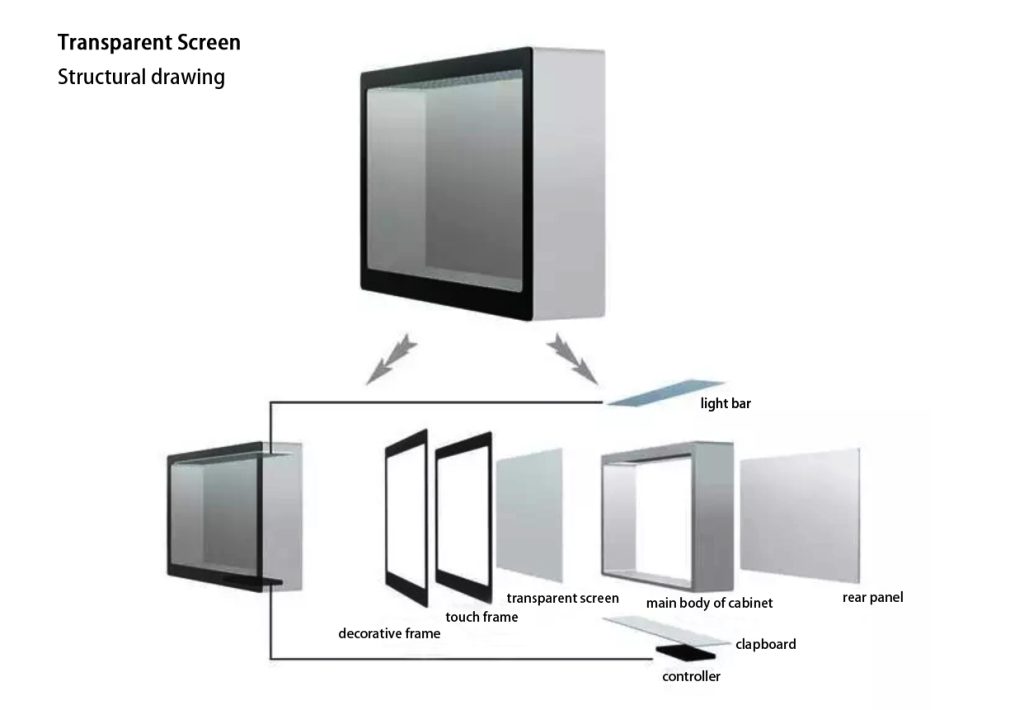
OLED transparent screens use organic light-emitting diode arrays with independent pixel control. When pixels are inactive, light passes through organic material layers, creating transparency. Key advantages include:
Commercial OLED transparent screens achieve 40%-70% transparency, with established applications in premium retail displays and museum exhibitions.
2.2 LCD Transparent Display Technology
LCD transparent screens optimize traditional liquid crystal structures through two main approaches:
LCD solutions offer lower costs and easier large-format manufacturing, but typically provide lower transparency (10%-50%) and contrast than OLED. They're widely used in cost-sensitive large-format applications like digital signage.
2.3 Projection-Based Transparent Displays
Projection systems display images on transparent media like holographic film. Key benefits include:
While excellent for stage performances and exhibitions, projection systems face ambient light challenges requiring controlled lighting environments.
2.4 Micro-LED Transparent Display Technology
Micro-LED represents the future of transparent displays with these advantages:
Though currently expensive, Micro-LED transparent screens are advancing rapidly in premium applications as mass transfer technology improves.
2.5 Key Technical Specifications
Essential transparent screen metrics include:
Chapter 3: Applications: How Transparent Screens Transform Industries
3.1 Retail and Commercial Displays
Transparent screens revolutionize retail experiences:
3.2 Smart Transportation and Automotive Displays
Transparent technology redefines driving experiences:
3.3 Architecture and Spatial Design
Transparent screens change how spaces interact:
3.4 Healthcare and Education Innovation
Professional applications create new work paradigms:
3.5 Cultural and Creative Industries
Chapter 4: Market Status and Industry Analysis
4.1 Market Size and Development Trends
Industry research indicates the global transparent display market will grow from approximately $1.5 billion in 2023 to over $10 billion by 2030, with a CAGR exceeding 30%. Growth drivers include:
4.2 Industry Chain Structure
The transparent screen ecosystem includes:
4.3 Key Players and Competitive Landscape
Current market features diversified competition:
Chapter 5: Challenges and Limitations
5.1 Technical Challenges
5.2 Cost and Supply Chain Limitations
5.3 Content and Software Ecosystem Gaps
5.4 Privacy and Ethical Considerations
Chapter 6: Future Trends: Where Transparent Screens Are Headed
6.1 Technology Evolution
6.2 Application Deepening
6.3 Industry Ecosystem Development
6.4 Social Impact Outlook
Chapter 7: Conclusion: The Era of Transparent Screens
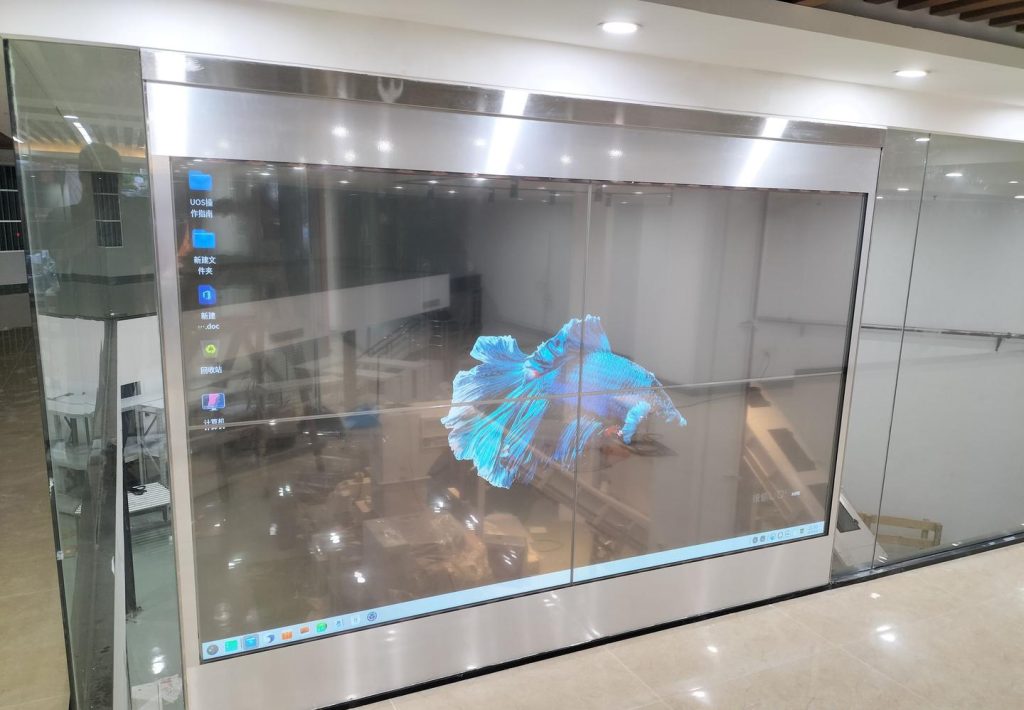
Transparent screens represent more than display technology - they redefine relationships between people, information, and environments. They signal a paradigm shift from "capturing attention" to "enhancing reality," from "closed interfaces" to "open canvases."
Short-term, transparent screens will deepen applications in commercial displays and premium automotive, proving commercial value through differentiated experiences. Medium-term, cost reductions will enable consumer electronics and smart home integration. Long-term, they may become fundamental human-computer interface infrastructure.
This evolution requires cross-industry collaboration - materials scientists developing better optics, engineers designing efficient manufacturing, designers exploring natural interactions, and policymakers establishing appropriate guidelines. Through such cooperation, transparent screen technology can fulfill its potential, creating a future where information seamlessly integrates with reality, and technology elegantly serves humanity.
The ultimate vision isn't a world filled with screens, but rather screens that disappear into our surroundings. When displays become transparent, our attention returns to what matters - not interacting with devices, but engaging more meaningfully with the world and each other through enhanced perception and capability.