
FaceLCD Hong Kong Limited
Tel: +8615818692944
E-mail: sales@facelcd.com
Address: 13F, Buiding B, Colorful Tech Park, Guanlan High tech park, Longhua Dist, Shenzhen,China ZIP code 518100
You are here: Home > Technology >
In the digital era, practically every smart device can be touched. Touch interfaces are now a common interface to interface with technology in smartphones and tablets, as well as industrial automation systems and medical equipment. However, what is a touch panel, and why has it become an essential element of modern electronics?
A touch panel is an electronic transparent screen that is overlaid on an LCD display, TFT LCD, or OLED display. When the panel is touched, the touch point is detected, and the information is sent to a touch controller IC. The controller then picks up the signal and translates it into an action such as:
• Opening an application
• Entering data
• Adjusting settings
• Controlling equipment
• Navigating menus
This basic interaction has changed the way individuals interact with machines in a myriad of industries.
The question that is most frequently asked is, " How does a touch panel work? This will be based on the type of touchscreen technology used. But the fundamental operation is alike:
1. A user touches the screen.
2. The location is detected by the touch sensor technology.
3. The signal is processed by the touch controller.
4. The system carries out the command.
The touch panel interface is an interface between the display module and the user, which offers a smooth interactive experience. Multi-touch technology enables contemporary systems to detect many touch points simultaneously, thereby providing advanced gestures such as zooming, rotating, and swiping.
Various applications have different touch solutions. The awareness of the nature of touch panels can help engineers pick the right technology.
A capacitive touch panel is a touch sensor that uses the electrical properties of the human body to detect touch.
Popular versions include:
• Projected capacitive touch panel
• PCAP touch panel
• Multi-touch panel systems
Key benefits include:
• Excellent touch sensitivity
• Smooth finger operation
• Multi-touch support
• High optical clarity
• Long operational lifespan
Capacitive touch screens are predominant in smartphones, tablets, kiosks, and smart home devices.
A resistive touch panel is based on pressure instead of electrical conductivity. Upon pressing the screen, conductive layers are touched, and the touch point is recorded.
Advantages include:
• Works with gloves
• Supports stylus input
• Dependable in the industry.
• Lower implementation cost
• Good compatibility with control systems.
One such technology is the 15-inch resistive touch screen of FaceLCD. It can be operated by finger, glove, and stylus, and this is why it is ideal in industrial HMI panels, medical equipment, handheld instruments, POS terminals, and control equipment. Customization of FPC layout, active area, connectors, and panel integration is also available in FaceLCD.
A surface acoustic wave touch panel uses ultrasonic waves, which travel on the surface of the screen. This technology provides:
• Exceptional image clarity
• High touch accuracy
• Durable glass surfaces
• Excellent visual performance
The rise of industrial automation has led to the need for rugged and reliable touch interfaces. Typical industrial touch panel uses are:
The HMI touch panel enables operators to operate machinery, observe production lines, and also control the settings of the system effectively.
Touch panels are popular in:
• Diagnostic systems
• Patient monitors
• Laboratory equipment
• Imaging devices
An industrial touch panel is a small device that provides easy access to machine controls.
Touch panels are applied in kiosks and in POS systems to make customer interactions easier in retail businesses.
Modern vehicles are powered by touch panels in their automotive displays.
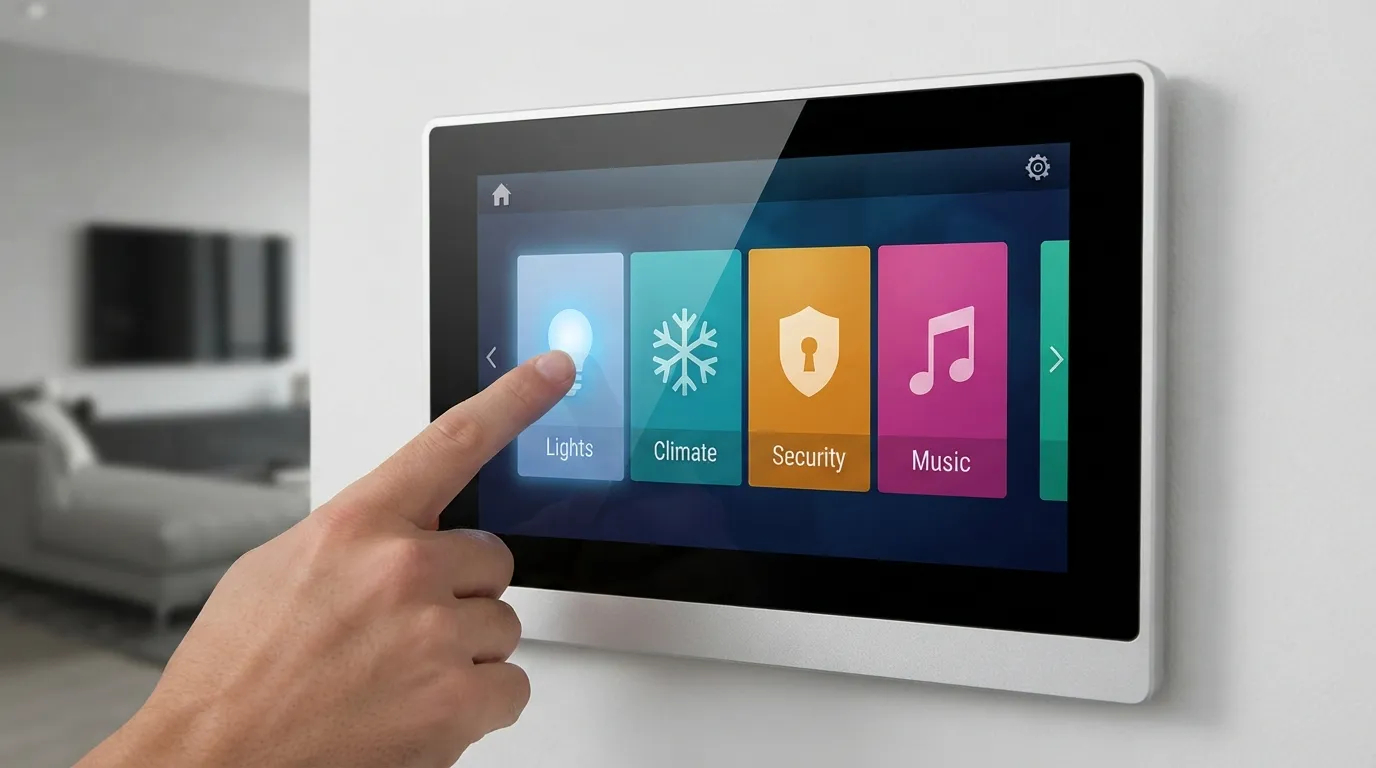
Touch panel functionality is essential to Smart thermostats, control hubs, and automation systems.
Touchscreen technology is popular due to a number of benefits.
The users can interact with content without peripherals.
The commands can be performed in a short period of time by touch-based navigation.
Touch screens also do away with the use of individual keyboards and buttons.
New, modern appearance enhances the appeal of the products.
Touch panels may be embedded in almost any embedded system or smart device interface.
In choosing a touch panel, take into account:
• Operating environment
• User interaction method
• Display size
• Interface requirements
• Durability needs
• Cost targets
FaceLCD provides capacitive and resistive touch solutions in the case of industrial applications, such as custom cover glass, FPC design, LCD integration, and interface matching. Their touch panel products are targeted to HMI systems, kiosks, medical equipment, smart home controls, and industrial touchscreen display systems.
What is a Touch Panel? Touch technology is not a luxury anymore; it is the basis of the new digital interaction. Touch panels have been used to transform the way humans interact with machines in consumer electronics and in sophisticated industrial control systems. The right technology, be it a capacitive touch panel or a resistive touch panel, can significantly enhance performance, reliability, and user experience.
FaceLCD has professional service and established manufacturing experience to serve companies seeking to find trusted touch panel display modules, industrial touch panel solutions, and custom touchscreen integration.