
FaceLCD Hong Kong Limited
Tel: +8615818692944
E-mail: sales@facelcd.com
Address: 13F, Buiding B, Colorful Tech Park, Guanlan High tech park, Longhua Dist, Shenzhen,China ZIP code 518100
You are here: Home > Technology >
Engineering teams creating next-gen products must select a custom LCD screen supplier that provides compatible displays that are customizable, precisely meet requirements, and are guaranteed throughout the lifespan of the product.
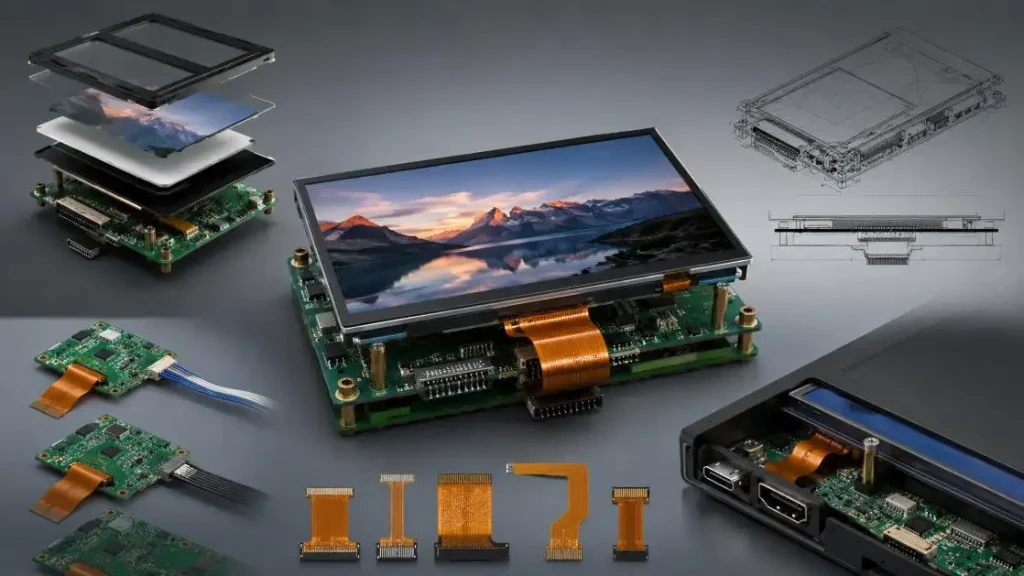
Smart appliances, medical devices and connected equipment used in industrial settings take up less space and are more portable. The design of these devices requires a small display as well. Standard displays restrict design due to limited sizes and an absence of flexible configuration.
FaceLCD custom designs and manufactures TFT-LCD modules with OEMs, engineers, and procurement specialists. FaceLCD allows product teams to design displays with different dimensions, interfaces, touch, and optical design based on the architecture of their device. This eliminates the need for product teams to re-engineer their solutions to accommodate standard displays.
As the latest devices trend even further toward compactness with greater levels of integration and specialization, the demands on displays will change as well. Custom LCD screen manufacturers need to be relied upon at the earliest design phases to meet these demands.
The latest smart devices, including portable, compact, and even hand-held instruments, require displays that occupy minimal space. Standard displays can result wasted space in enclosures.
Custom TFT-LCD solutions give design teams the freedom to determine:
• The outline and active area
• FPC placement and routing
• Connector placement
• The structure of the touch panel
The design trade-offs are eliminated, compactness is improved, and greater flexibility is achieved.
Embedded systems require a range of display interfaces based on varying processor architectures and differing performance requirements.
Examples include the following:
• RGB: Found in basic level microcontrollers and in HMI systems with low complexity data communication.
• SPI: Used for small displays with slow refresh rates.
• LVDS: Used in long distance communication industrial displays with low emission interference.
• MIPI: Used in small displays with high bandwidth and easy integration on the PCB.
• eDP: High-resolution displays are necessary in certain computing systems and industrial display applications.
A display solution that directly interfaces with a mainboard minimizes additional conversion components, thus providing a lower overall stack-up and BOM.
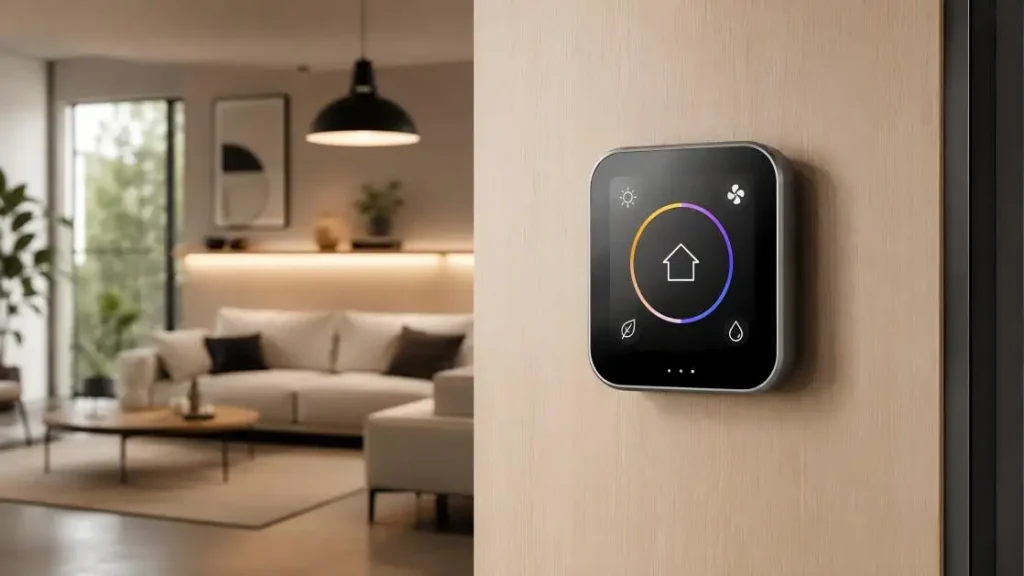
Every OEM has its own preferences for display functions, which transcend the industry in which the OEM operates. As a result, custom LCD screen manufacturers are now rethinking their display functions to go beyond the dimensions and resolution of the screen.
| Application | Primary Display Functionality Needs | Standard Customization Options |
| Smart Home Devices | Design needs to be sleek, lightweight, and low power | IPS TFT, personalized FPC, and slim cover lens |
| Portable Medical Displays | Design needs to be bright, strong, and reliable with a stable HMI | High res TFT, MIPI, with optical bonding and backlight stability |
| Industrial HMIs | Readable in sunlight, long lasting, and requires interaction | High brightness, anti-glare, and touch (resistive or capacitive) coatings |
| Automotive Displays | Stable with low glare and low display temperatures | High brightness with Industrial, anti-reflective coatings, and touch (resistive or capacitive) coatings |
| Commercial Displays | Strongly interactive with high brightness | 10.4'' to 15.6'' TFT with PCAP and optical bonding |
The alignment of display functions to meet requirements reduces design risk and enhances reliability.
Laboratory results can be misleading. Displays that seem to function as intended can exhibit unexpected behavior and require extensive modifications once integrated in the final build.
FaceLCD helps to customize TFT-LCDs based on the environment that they will be situated in.
Some examples of Mechanical Customizations are:
• Display outline optimization: this eliminates gaps between the display and build enclosure. This can sometimes cause some UI elements to become unviewable.
• Customized FPC: this modifies the shape and routing of the FPC in accordance to the PCB.
• Custom Cover Lens: this meets the protective and structural varying needs of different environments.
Different environments can demand different optical customizations on the display.
Some examples are:
• Backlights with different levels of brightness with the highest being for outdoor and industrial use.
• Surface treatment that minimizes reflections and glare.
• Sunlight readability enhancement.
• Air gap elimination via optical bonding improves contrast and reduces internal reflections.
These provide strong visibility in environments with strong lighting.
In facing the 2026 product deadlines, companies will need to start considering the trade offs between the speed, cost, and availability of product prototypes and product launches. Working with a custom LCD screen manufacturer enables productive technical discussions and offers more flexibility.
Samples for some specific custom TFT-LCD designs can be generated in as little as 7 to 10 working days after approval of the design. The specific time frame is dependent on panel size, production tooling, and available components as well as any required touch solutions.
Custom display suppliers can support:
• Engineering prototypes
• Small-volume builds
• Validation production
• Mass production
The ability to offer support at this breadth of production stages means they can manufacture at any scale.
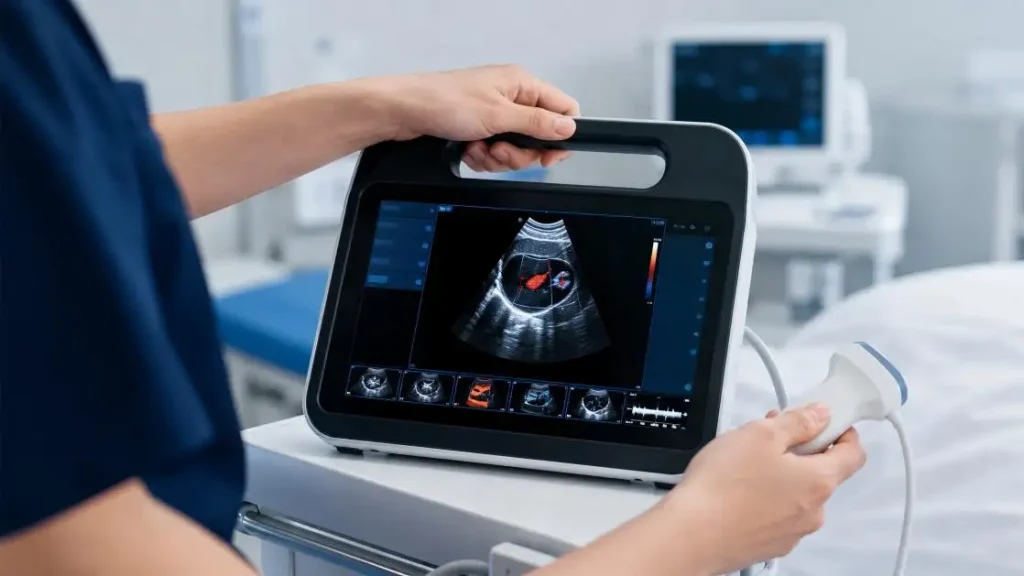
Especially for industrial and medical applications, the need for support over protracted lifecycles makes stable sourcing and production of display solutions extremely important in order to mitigate the risks associated with display replacement or discontinuance.
A display supplier can help resolve issues related to the following well in advance of starting a sample build:
• Mechanical design
• Electrical design
• Optics
• Touch solutions
• Manufacturability
The best display suppliers integrate deeply with the engineering team rather than just offering off-the-shelf solutions.
By choosing an optimal display partner early in the design process, businesses can attain greater integration, reduce the frequency of design revamps, and adhere to their 2026 product timelines.
For custom TFT-LCD inquiries, please contact the FaceLCD engineering team.
�� sales@facelcd.com
☎️ +86 15818692944
�� FaceLCD Hong Kong Limited
13F, Building B, Colorful Tech Park, Guanlan High-tech Park, Longhua District, Shenzhen, China.
Q1. What are the specifications for a custom LCD project?
Typically, we are looking for the size, resolution, interface, if touch is needed, the environment it will be used in, and any mechanical drawings.
Q2. What are the benefits for using a custom LCD display versus a standard display?
The primary benefit is a better fit and compatibility for the specific application needs regarding mechanics, interface, and performance.
Q3. Which display interfaces are flexible?
The flexibility typically includes interfaces such as RGB, SPI, LVDS, MIPI DSI, and eDP, but it will vary based on what is needed for the system.
Q4. Are there flexible shapes and sizes for the LCD?
Absolutely. Custom LCD modules can be designed for specific sizes, shapes, FPC layouts, connectors, and active areas.
Q5. Do custom LCD screens have the capability for touch?
Definitely. Depending on the needs of the application we can implement touch, including resistive and projected capacitive (PCAP) touch.