
FaceLCD Hong Kong Limited
Tel: +8615818692944
E-mail: sales@facelcd.com
Address: 13F, Buiding B, Colorful Tech Park, Guanlan High tech park, Longhua Dist, Shenzhen,China ZIP code 518100
You are here: Home > Technology >
Buying an LCD module, touch panel, cover glass, connector, and bonding service from separate suppliers can appear economical at first. However, the real cost becomes clearer after adding engineering coordination, fixtures, assembly equipment, inspection, rework, scrap, and supplier management.
FaceLCD provides LCD and touch panel assembly support for OEM and ODM projects. The service can coordinate display selection, touch-panel customization, cover glass, FPC routing, connectors, bonding, sample development, and final inspection within one display project.
Instead of comparing component prices alone, buyers can evaluate the complete cost, technical risk, and internal resources required to produce a reliable finished assembly.
Send FaceLCD your LCD model, touch requirements, mechanical drawings, application conditions, and expected quantity to request an assembly review and quotation.
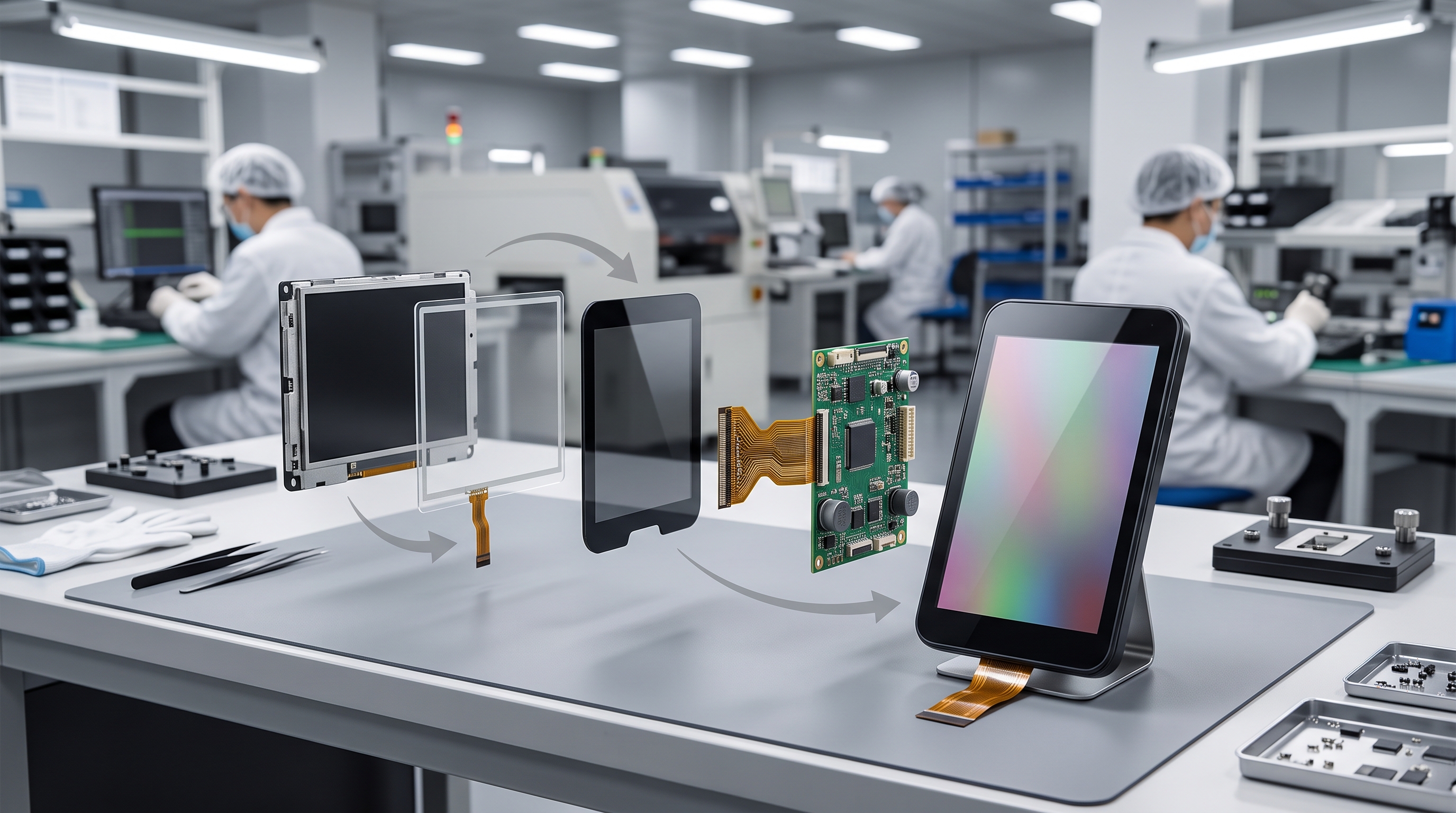
FaceLCD can support projects that require more than an LCD module and touch panel supplied as separate parts. Depending on the design, the company can coordinate the components and manufacturing steps needed to produce an integrated LCD touch display assembly.
A project may include:
The exact scope depends on the mechanical design, electrical interface, application environment, order quantity, and acceptance requirements.
FaceLCD can review the relationship between the LCD, touch panel, cover glass, housing opening, FPC direction, and connector position before sampling.
This can help identify problems such as:
| Assembly Element | Available Decision | Buyer Information Required |
|---|---|---|
| LCD module | Size, resolution, interface, brightness, viewing angle | Existing model or required specifications |
| Touch panel | Capacitive or resistive | Input method and operating conditions |
| Cover glass | Size, thickness, border printing, treatment | Mechanical and appearance drawings |
| FPC and connector | Direction, length, pinout, connector type | PCB layout and enclosure information |
| Bonding | Air bonding or optical bonding | Optical, environmental, mechanical, and budget requirements |
| Inspection | Dimensional, visual, touch, display, and backlight checks | Defined acceptance criteria |
Internal LCD touch assembly may provide direct production control, but the total investment extends beyond purchasing the display components.
An internal assembly process may require:
These costs may be reasonable for a company with an established display assembly line and stable production volume. They may be difficult to justify when the assembly is only one part of a broader equipment project.
The less visible costs can have an equal or greater effect on the project.
When the LCD, touch panel, cover glass, bonding, and other parts come from different suppliers, the buyer may need to manage:
A low component price does not automatically produce a low completed-assembly cost.
Outsourcing should not be presented as a way to eliminate every project expense. Buyers may still need to budget for:
A useful cost-benefit analysis must include both the costs that outsourcing may reduce and the responsibilities that remain with the buyer.
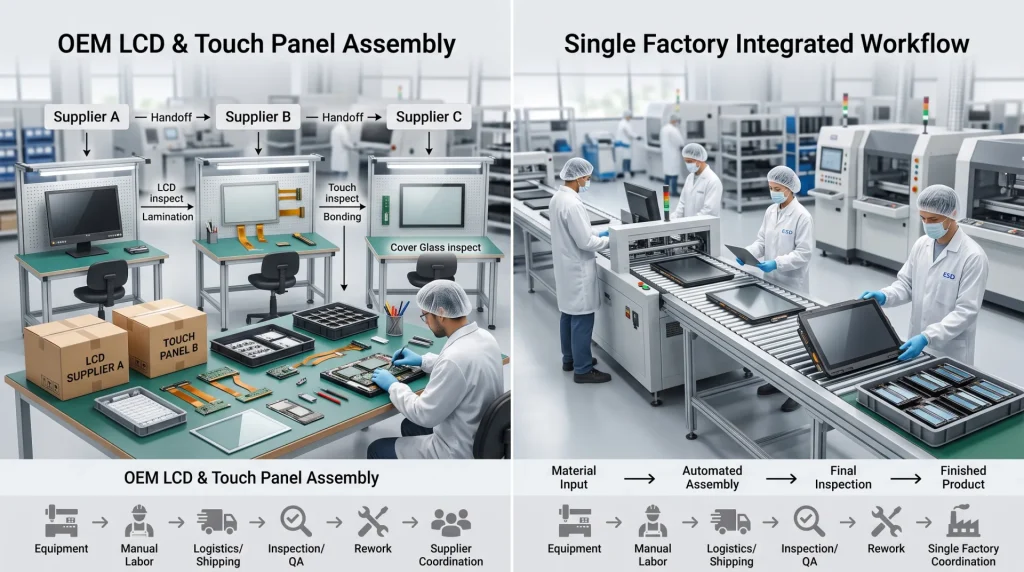
The correct decision depends on production volume, internal capability, design complexity, quality requirements, and the importance of direct process control.
| Cost or Decision Area | Internal Assembly | Outsourcing to FaceLCD | Buyer Verification Needed |
|---|---|---|---|
| Equipment investment | Buyer purchases and maintains equipment | Supplier manufacturing capability is used | Confirm the exact processes included |
| Assembly environment | Buyer establishes and controls the area | FaceLCD can use its lamination and assembly facilities | Review relevant factory evidence |
| Component coordination | Buyer manages several suppliers | LCD, touch, glass, FPC, and bonding can be coordinated in one project | Confirm the final project scope |
| Engineering responsibility | Primarily handled internally | Shared between the buyer and FaceLCD | Define drawing and approval responsibilities |
| Tooling | Internal fixtures and tools are required | Project tooling or NRE may apply | Confirm ownership and reuse |
| Quality inspection | Buyer creates the complete inspection process | FaceLCD performs agreed assembly checks | Define acceptance criteria |
| Rework management | Buyer investigates internal failures | Supplier handles agreed manufacturing defects | Clarify warranty and responsibility |
| Schedule control | Direct internal production control | Dependent on supplier capacity and materials | Confirm lead time and continuity planning |
| Scalability | Requires internal capacity expansion | Supplier capacity may support volume growth | Confirm MOQ and production capacity |
| Intellectual property | Greater internal control | Requires controlled technical-data sharing | Use appropriate agreements |
Outsourcing may simplify the process, but the buyer should still confirm specifications, responsibilities, quality standards, and production expectations before approving the project.
Outsourcing LCD and touch panel assembly may provide the strongest benefit when:
The potential benefit is not limited to labour cost. It may also come from reducing supplier handoffs, duplicated inspection, mismatched parts, internal process development, and assembly rework.
Internal assembly may remain the better option when the buyer has:
The decision should therefore be based on total cost, process capability, technical risk, and strategic control rather than on the quoted unit price alone.
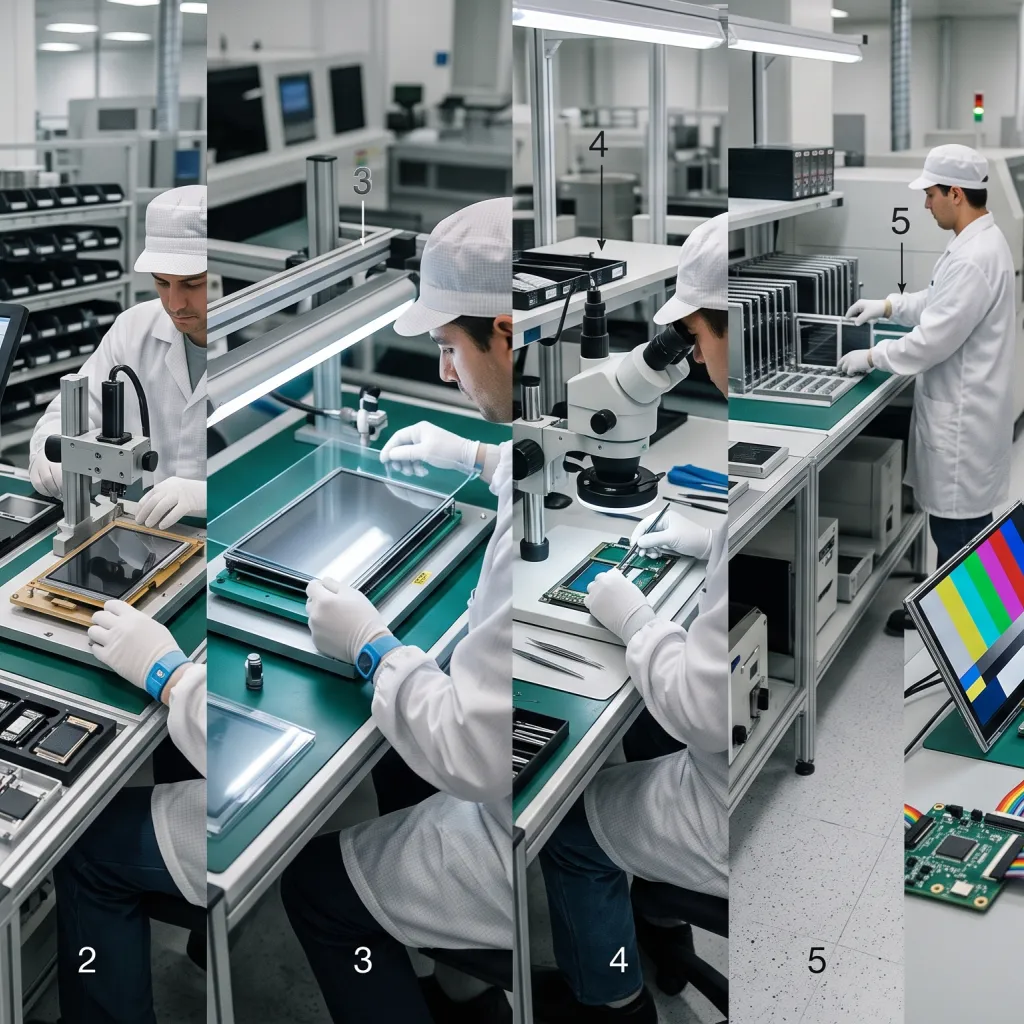
FaceLCD first reviews the product application and basic display requirements.
The buyer should provide information such as:
The LCD, touch panel, cover glass, housing, FPC, connector, and mainboard must work together mechanically and electrically.
The review may include:
Finding a mismatch before tooling and sampling is generally less costly than correcting it after a complete device has been built.
The bonding structure is selected according to the application.
Air bonding may suit projects that require a simpler assembly structure and do not need full bonding between the display and touch layers.
Optical bonding may be considered when the project has higher requirements for display clarity, internal reflection control, structural stability, or environmental performance.
The assembly page should keep this decision practical. Detailed bonding-material and process selection belongs in the dedicated LCD display optical bonding service topic.
After reviewing the requirements, the commercial and engineering scope can be defined.
The quotation may consider:
Buyers should confirm which items are included and which charges are one-time project costs.
A sample lets the buyer evaluate the assembly before production.
The sample review may cover:
The buyer should approve the sample against documented requirements rather than relying only on visual acceptance.
Important approval points include:
After sample approval, the confirmed drawing, component list, assembly method, and acceptance criteria become the production reference.
A trial run may be used when the project requires additional validation before moving to full production.
The completed assemblies can be checked for:
The exact inspection method should be agreed upon during project development.
A coordinated assembly project reduces risk only when the engineering and quality requirements are clearly controlled.
FaceLCD’s process should focus on:
Before production, the buyer and supplier should agree on:
Numerical tolerances should come from approved project drawings and confirmed inspection standards.
FaceLCD supports the assembly service with display and touch-panel manufacturing resources, including a dust-controlled lamination environment, lamination equipment, touch-panel processing equipment, screen-printing capability, production lines, and inspection processes.
These capabilities are relevant because the completed product depends on more than attaching a touch panel to an LCD. The supplier must also control alignment, component fit, bonding quality, appearance, touch response, and display performance.
FaceLCD can coordinate LCD modules, touch panels, cover glass, FPCs, connectors, bonding, sampling, and inspection within one display-solution project. The exact internal and external production scope should be confirmed for each order.
Consider an industrial HMI manufacturer sourcing its display system from several companies:
This structure may create several problems:
Under a coordinated FaceLCD assembly project, the scope may instead include:
The buyer can then compare measurable outcomes such as supplier count, engineering hours, sample cycles, rework, scrap, assembly labour, and total completed-unit cost.
Any published project result should use verified FaceLCD data rather than estimated savings.
To receive a useful quotation and sample plan, prepare as much of the following information as possible:
Submit your LCD, touch-panel, cover-glass, and housing drawings to FaceLCD for an engineering review.
FaceLCD supports custom display projects involving LCD modules, capacitive and resistive touch panels, cover glass, FPCs, connectors, interfaces, bonding, sampling, and inspection.
The main commercial value is the ability to coordinate several display-related decisions within one project rather than leaving the buyer to manage each component and process independently.
Relevant capabilities include:
The final benefit depends on the design, quantity, assembly structure, and the buyer’s existing internal capabilities. FaceLCD can review these details before recommending a project approach.
Yes. FaceLCD can review the LCD, touch panel, cover glass, FPC, connector, bonding structure, and other project requirements to provide a coordinated assembly where the design is technically suitable.
A customer-specified LCD model can be reviewed. FaceLCD must confirm availability, compatibility, dimensions, interface, bonding structure, and production requirements before accepting the configuration.
Yes. FaceLCD supports capacitive and resistive touch-panel projects. The correct option depends on the required input method, cover structure, environment, glove or stylus use, and product application.
Air bonding leaves an air gap between the LCD and touch structure. Optical bonding fills the gap with a transparent bonding material. The correct method depends on optical, environmental, structural, and cost requirements.
These elements can be reviewed for customization. The buyer should provide mechanical drawings, PCB information, connector details, FPC direction, cable length, pinout, and interface requirements.
Useful files include the LCD drawing, touch-panel drawing, cover-glass drawing, housing drawing, PCB information, connector specification, active-area dimensions, FPC requirements, and assembly acceptance criteria.
Yes. Sample development allows the buyer to inspect mechanical fit, alignment, appearance, display function, touch response, connector compatibility, and housing installation before production approval.
Testing may include display output, backlight function, touch response, visual appearance, alignment, FPC condition, connector condition, and other agreed project-specific checks.
Important factors include display size, touch type, cover-glass customization, FPC design, connector requirements, bonding method, tooling, sample quantity, order volume, inspection requirements, and packaging.
It may be suitable when the buyer does not want to invest in dedicated assembly equipment, fixtures, training, and clean-space capability. The economics should still be reviewed against tooling, sample, and minimum-order requirements.
Send FaceLCD your LCD model, touch requirements, cover-glass or housing drawings, FPC and connector information, preferred bonding method, operating conditions, prototype quantity, and expected production volume.
FaceLCD’s engineering and sales teams can review the assembly structure, identify compatibility risks, and prepare a project-specific quotation and sample plan.