
FaceLCD Hong Kong Limited
Tel: +8615818692944
E-mail: sales@facelcd.com
Address: 13F, Buiding B, Colorful Tech Park, Guanlan High tech park, Longhua Dist, Shenzhen,China ZIP code 518100
You are here: Home > Technology >
For safe and effective functioning in open-air environments, high contrast display technology is essential. Sunlight readability is a must for operators in control of automation systems and transport, energy hardware and external control terminals as they must be able to read alarms and parameters and access real-time data.
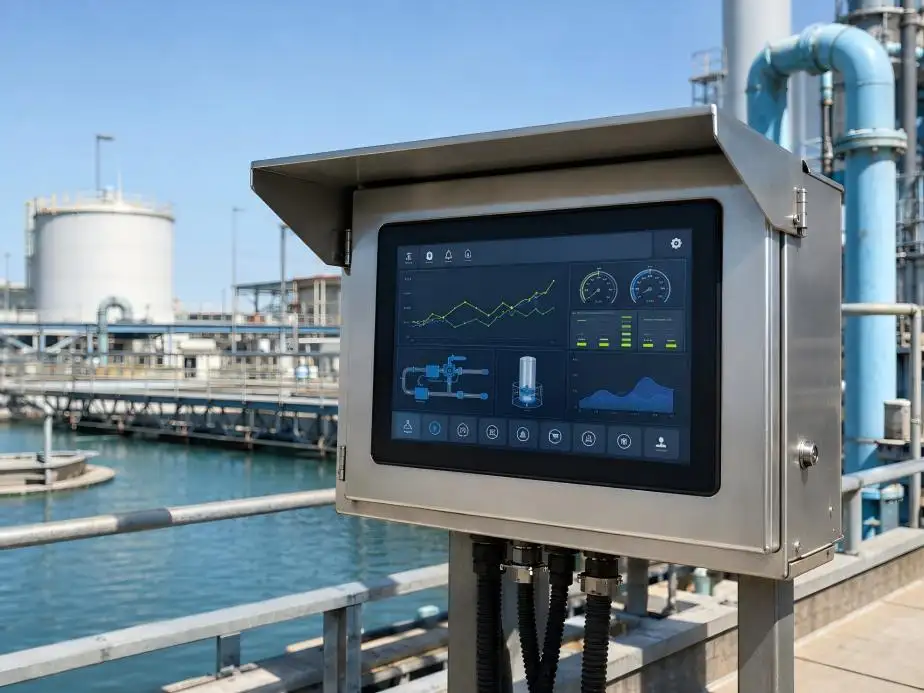
A standard display often suffers from washed-out images, weak contrast, and distracting reflections when exposed to strong ambient light. Therefore, modern LCD displays for industrial equipment are no longer designed as simple monitors. Engineered optical systems integrate backlight, reflection management, thermal control, and display optimization technologies to provide consistent readability in direct sunlight.
The primary design challenge is not the generation of high levels of sunlight, but rather the control of interaction of the generated sunlight with the display.
When direct sunlight interacts with a display, two primary challenges are presented:
•Ambient light causes the differences between light and dark areas to become indistinguishable.
•Surface reflections increase brightness and reduce image sharpness.
These effects lead to low contrast and poor legibility of display text and graphics.
For industrial displays, rather than competing with a high level of ambient light, legibility in direct sunlight is achieved by designing displays with sufficiently high contrast. For outdoor use, a sunlight readable display manages reflections and enables high luminance to display images.
Industrial LCD modules need backlights with brightness levels of 800 cd/m² to 1500 cd/m² and higher to optimize the performance of their outdoor displays.
While backlights of that magnitude overcome the performance challenges sunlight displays, they introduce additional challenges for thermal management.
Key design elements include:
•Unique and varied configurations of LED arrays.
•Thermal management
•Intense backlighting creates thermal stress on optical components and films. Stress should be managed.
•Brightness control systems
Energy waste of the backlight systems can be managed through the integration of ambient light sensors and automatic dimming systems.
Readability under sunlight can be affected by internal reflection, among many other things.
Standard displays have air gaps between the LCD, touch sensor, and cover glass. Each air gap interfaces reflect light and worsen readability.
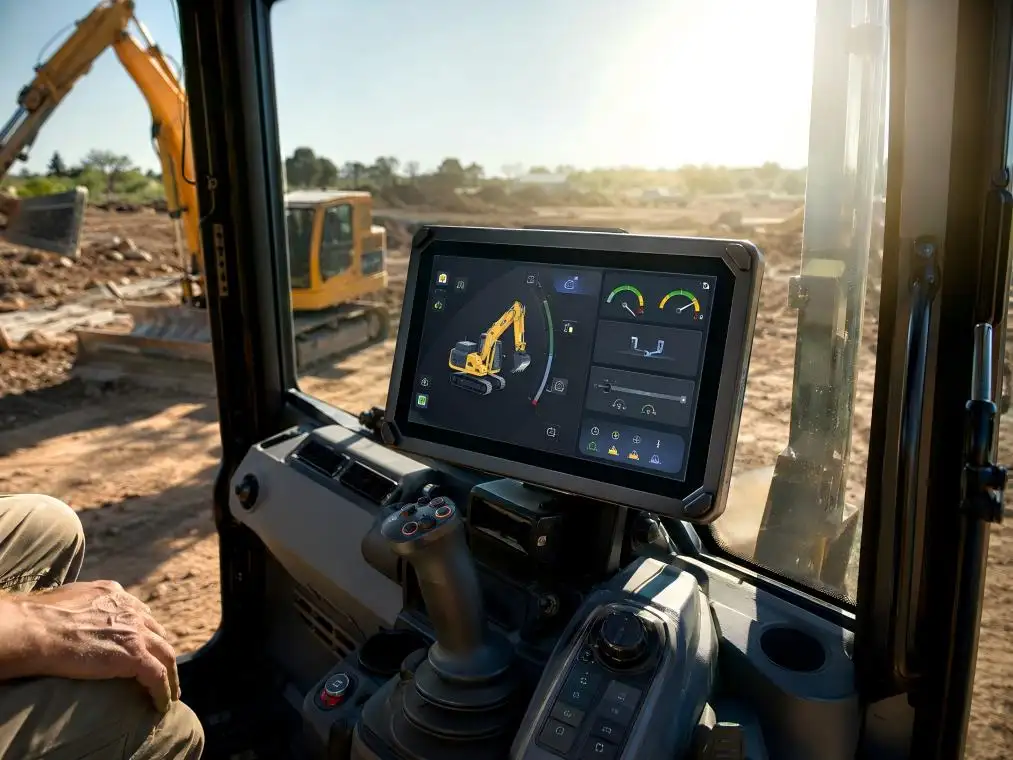
Optical bonding uses a transparent adhesive to fill gaps. The adhesive can be OCA, LOCA, or a silicones-based material.
Optical bonding improves:
•Internal Reflection
•Black Level Performance
•Perceived Contrast
•Vibration and Shock
Industrial LCD displays require optical bonding to increase the durability of the display in demanding environments.
The front-facing surface of a display makes sunlight reflection control a necessity.
Anti-Reflective (AR) Coating
AR coatings use multi-layer optics to reduce surface reflection. Outdoor readability can be greatly enhanced by the reduction of surface reflection by high-performance designs.
Anti-Glare (AG) Treatment
AG treatment involves the structuring of a surface in a controlled manner to reduce the severity of reflections. In contrast to producing a strong, glare-inducing reflection, reflected light is made softer and less noticeable.
The majority of industrial displays incorporate AR and AG technologies:
•AR diminishes the overall intensity of reflections.
•AG increases the visibility of the display as the angle of incidence of reflecting light alters.
This combination of technologies is prevalent in outdoor HMI systems, vehicle displays, and industrial control systems.
The performance of displays in sunlight is also affected by the structure of the LCD panels.
The latest generation polarizers am improve the efficiency of light transmission with the retention of image stability. IPS and VA panels with a Normally Black configuration are able to achieve deeper blacks and improved perceived contrast in the majority of industrial applications.
Additionally, wide temperature range liquid crystal materials and compensation films contribute to the stable performance of displays in a variety of different environmental conditions.
The majority of industrial LCD modules are designed for an extended operational temperature range of between -20°C to +70°C based on the requirements of the products.
FaceLCD knows designing industrial LCDs that operate in extreme outdoor conditions is not just a matter of brightness. We have taken a systematic look at the optics and the entire system that includes the following:
•Performance of the backlight
•Optical bonding
•Selection of cover glass
•Treatments of the surface to reduce and/or eliminate reflective and/or absorbing coatings
•Touch screen integration
•Design for thermal management
Each element of the system and its design is balanced against the others in order to optimize not just performance but also the longevity and reliability of the system.
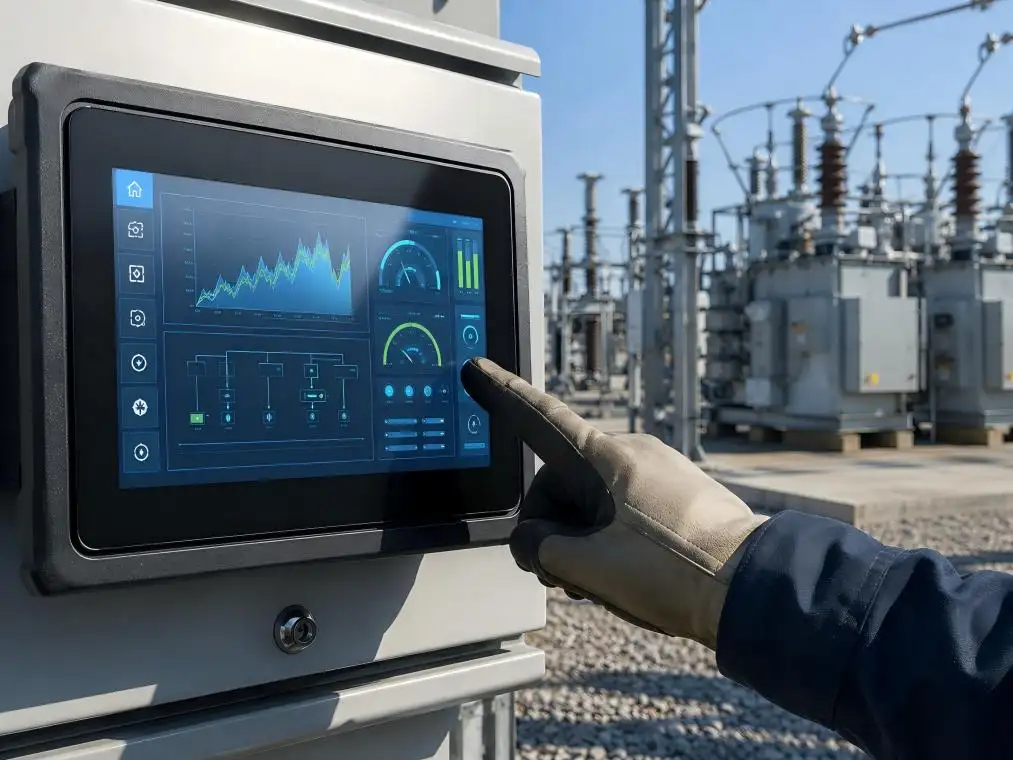
FaceLCD knows that designing industrial LCDs requiring High Brightness that are useful in extreme outdoor conditions for long periods of time is a thermal management problem. FaceLCD has developed a range of thermal management solutions. These include structures of aluminum used to dissipate heat and an optimization of the driving electronics for the LEDs.
FaceLCD designs for outdoor industrial applications in automation and SCADA systems, as well as outdoor monitoring systems, the required stability in the fluctuating and varying conditions of temperature for the operation of the displays.
Outdoor operating conditions may require the user to touch the displays with gloved hands due to the outdoor operating conditions. FaceLCD has developed solutions for touch integration that include both resistive touch technologies and projected capacitive touch technologies, as well as maintaining the optical bonding.
The selection of an industrial display is much more than a typically used brightness comparison. Outdoor displays require careful consideration of the following:
•Brightness in outdoor lighting
•Viewing angles
•Display operating temperature range
•The shock and vibration the display must withstand
•Touch functionality
•Power requirements
•The lifetime of the display
Industrial displays require a careful balance of optical, thermal, and mechanical design to ensure industrial displays are reliable, robust, and useful.
Achieving sunlight readability goes beyond just increasing brightness. It involves an integrated approach to the entire display system.
Certain advanced technologies and treatments can enable industrial displays to deliver superior image and performance even in harsh outdoor environments. High-brightness LED backlights are one example. Optical bonding is another. AR/AG surface treatments and advanced LCD technologies help as well.
These displays offer a trusted interface to let users safely and easily supervise and manage important systems. They transform an ordinary display into a valuable component of contemporary industrial systems. Improve your industrial displays with FaceLCD's sunlight readable technology. Reach out to us for your tailored display module.
Q1. What are the components of an LCD display that enable it to be sunlight readable?
High brightness, combined with optical bonding and reflection control, allow an LCD display to be sunlight readable.
Q2. Is it enough to just increase brightness to make LCD displays readable outdoors?
No, outdoor visibility also hinges on contrast enhancement and reflection reduction.
Q3. What is the appropriate brightness level for industrial outdoor displays?
The appropriate brightness level for industrial outdoor displays is generally considered to be 800 cd/m² or greater depending on the outdoor conditions and the intensity of the sunlight.
Q4. What is the advantage of optical bonding for industrial LCD displays?
In bright environments, the internal reflections become less and the contrast sharpens due to optical bonding.
Q5. What is the difference between anti-reflective and anti-glare treatments?
The difference between anti-reflective and anti-glare treatments is that anti-reflective treatments reduce the amount of light reflected off of a surface, while anti-glare treatments increase visibility of surfaces by light diffusion.