
FaceLCD Hong Kong Limited
Tel: +8615818692944
E-mail: sales@facelcd.com
Address: 13F, Buiding B, Colorful Tech Park, Guanlan High tech park, Longhua Dist, Shenzhen,China ZIP code 518100
You are here: Home > Technology >
Biometric access control systems are now a critical component of the security infrastructure of modern workplaces and residences, industrial sites, and even facilities that serve the public. Among the many systems that use biometric technologies, such as facial recognition and fingerprint validation, the reliance on hardware and software systems goes far beyond the technologies that provide faster validation of identity.
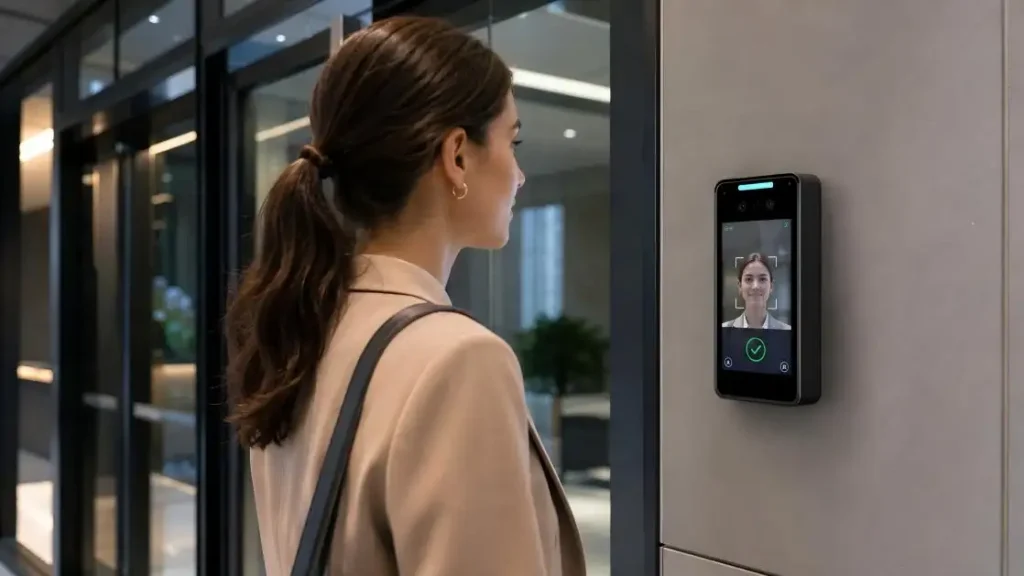
The display on a biometric terminal is the primary system interface for the user. When an access control system utilizes a display screen, dynamic feedback for the user is provided to guide them through the validation process, optimizing both the user experience and the efficiency of the system.
Selecting an appropriate TFT LCD display module is important for system designers and engineers when developing effective biometric terminals.
When users approach a terminal that utilizes facial recognition or a fingerprint scanner, the display is the primary communication interface for the system. Compared to a simple LED guide, a display that is an LCD screen provides a visual guide and therefore helps the user understand the authentication process.
Displays that provide dynamic feedback guide the user in the authentication process, in that the display instructs the user with messages such as:
"Place your Finger on the Sensor"
"Face in Recognition Zone"
"Authentication Done"
This helps minimize authentication errors and serves to increase the throughput of the authentication in access control systems where there is high user traffic.
Authentication status is communicated on the LCD screen and is done in a timely fashion. Validation of authentication provides visual feedback, and interactive icons or messages provide status of the authentication process, thereby reducing traffic congestion at points of access.
Touch-enabled biometric terminals allow administrators to manage system settings through the terminal display. With this terminal, administrators can manage user enrollment, system parameters, or access system logs, all through the terminal without additional equipment.
Because of the reliability, compact size, and easy integration of TFT (Thin-Film Transistor) LCD technology within embedded systems, many biometric devices use TFT LCD technology.
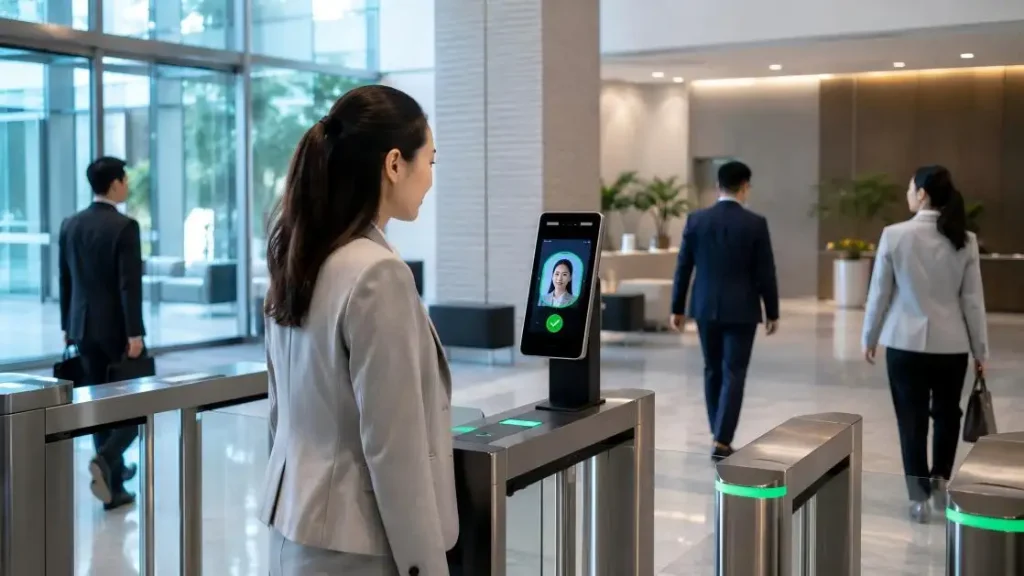
Facial recognition terminals often require the display to show a live image for users to position themselves correctly. An example of a good value resolution that balances detail, system cost, and power consumption is 480×272. This resolution is often used in compact access control devices.
Typically, access terminals are positioned at a fixed location, and hence a fixed height, but user heights and the positions from which users view the terminals vary. An example of a TFT panel technology that helps maintain consistent image quality and reduces color distortion and contrast is an IPS panel with a wide viewing angle.
The color capabilities of modern TFT LCD modules are in the millions, which helps clearly convey warning messages, icons and text of the interface to the user. Repeated and consistent displays of color help the user understand the system and build their trust.
The stability of LED backlighting and low power draw makes it a good candidate for indoor access control applications. A backlighting level of ~300 cd/m² provides good illumination for office entrances, corridors, and building lobby access controls.
Different installation environments create different display requirements. Engineers typically evaluate several factors before selecting a suitable LCD module.
| Display Feature | Importance in Biometric Applications |
| Viewing Angle | Users can different heights and positions can clearly see the information with wide viewing angles utilizing IPS technology. |
| Brightness & Anti Glare | Anti glare treatment and brightness around 300 cd/m² provides improved readability with bright and/or reflective indoor lighting. |
| Touch Compatibility | Users can interact with and configure the device with either capacitive or resistive touch technology. |
| Operating Temperature | Use in indoor and semi outdoor applications can be supported with the use of a standard industrial temperature range of -20°C to 70°C. |
| Interface Compatibility | Integration with embedded controllers and mainboards is simplified using interfaces such as RGB or TTL. |
| Mechanical Design | Realiable integration of enclosures is ensured with use of proper dimensions, connector placement, and bonding structure. |
FaceLCD wishes to provide a variety of display solutions for security and industrial applications with its small and medium sized TFT LCD modules.
One of the compact modules for biometric terminals is our FB043XSG401-B, which incorporates an IPS panel and provides excellent flexibility for integration along with durability.
This module provides an excellent resolution for use in developing the interfaces for fingerprint authentication, facial recognition, and an associated menu structure for device interactivity at 480x272.
This display allows stable image quality to be viewed from all directions and is therefore an excellent choice for wall mounted access control devices.
The module features a 40-pin RGB interface, which affords compatibility with a wide range of embedded control systems. FaceLCD offers support during the development phase to aid integration by providing assistance for interface timing, connector configuration, and backlight requirements.
Depending on the product specification, the display may be combined with cover glass, and/or integrated with either capacitive or resistive touch solutions. Consideration of optical bonding, visible area design, and mechanical structure helps improve the reliability of the final device.
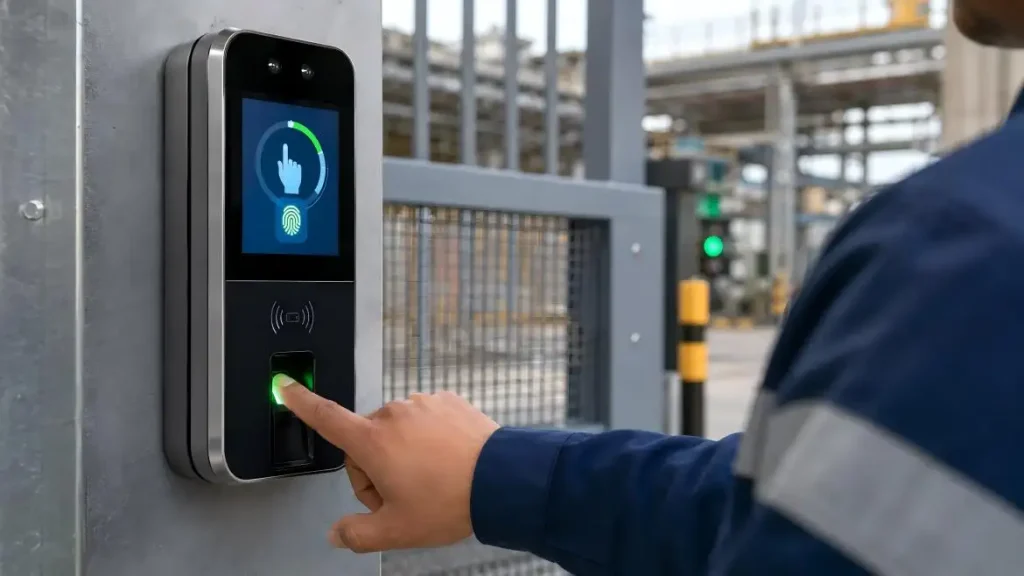
With an operating temperature range of -20°C to 70°C and storage capability up to 80°C, the module can support applications installed in environments with moderate temperature fluctuations, including entrance areas and covered outdoor terminals.
A biometric access control system depends on more than recognition accuracy. The design of the system impacts both the overall usability of the device and the clarity of the information presented.
An appropriate LCD screen for access control can create faster, clearer, and more robust solutions. By addressing viewing angle, brightness, touch, interface, and ambient conditions, designers of biometric terminals can achieve reliable and consistent performance in the field.
FaceLCD, via its expertise in design and construction of TFT LCD modules, assists manufacturers of security equipment in the selection and integration of displays that fulfill the requirements of contemporary biometric access systems.
Q1. What size LCD screen is generally appropriate for access control systems?
Typical sizes are 2.8, 3.5, 4.3, 5, and 7 inch TFT LCD modules depending on the design of the terminals.
Q2. What are the advantages of TFT LCD Displays in Biometric Access Control Devices?
Compared to traditional displays, TFT LCDs are faster to respond, easier to customize, more responsive, clearer, and integrate more readily with embedded systems.
Q3. Should access control displays use IPS or TN LCD technology?
Wider viewing angles and better color consistency of IPS technology make it more appropriate for user facing terminals.
Q4. What is the appropriate brightness value of an access control LCD?
An indoor setting use about 300 cd/m², while an outdoor setting would use a value greater than 300 cd/m².
Q5. Can an access control LCD provide touch functionality?
Yes. Integration of capacitive touch, resistive touch, or protective cover glass are some of the options available for TFT LCD modules.