
FaceLCD Hong Kong Limited
Tel: +8615818692944
E-mail: sales@facelcd.com
Address: 13F, Buiding B, Colorful Tech Park, Guanlan High tech park, Longhua Dist, Shenzhen,China ZIP code 518100
You are here: Home > Technology >
The LQ035NC111 is a 3.45-inch transmissive a-Si TFT LCD module commonly classified in the 3.5-inch display category. It provides a 320 × 240 QVGA resolution, a 4:3 aspect ratio and multiple digital video input modes, including 24-bit RGB, serial RGB, CCIR601 and CCIR656.
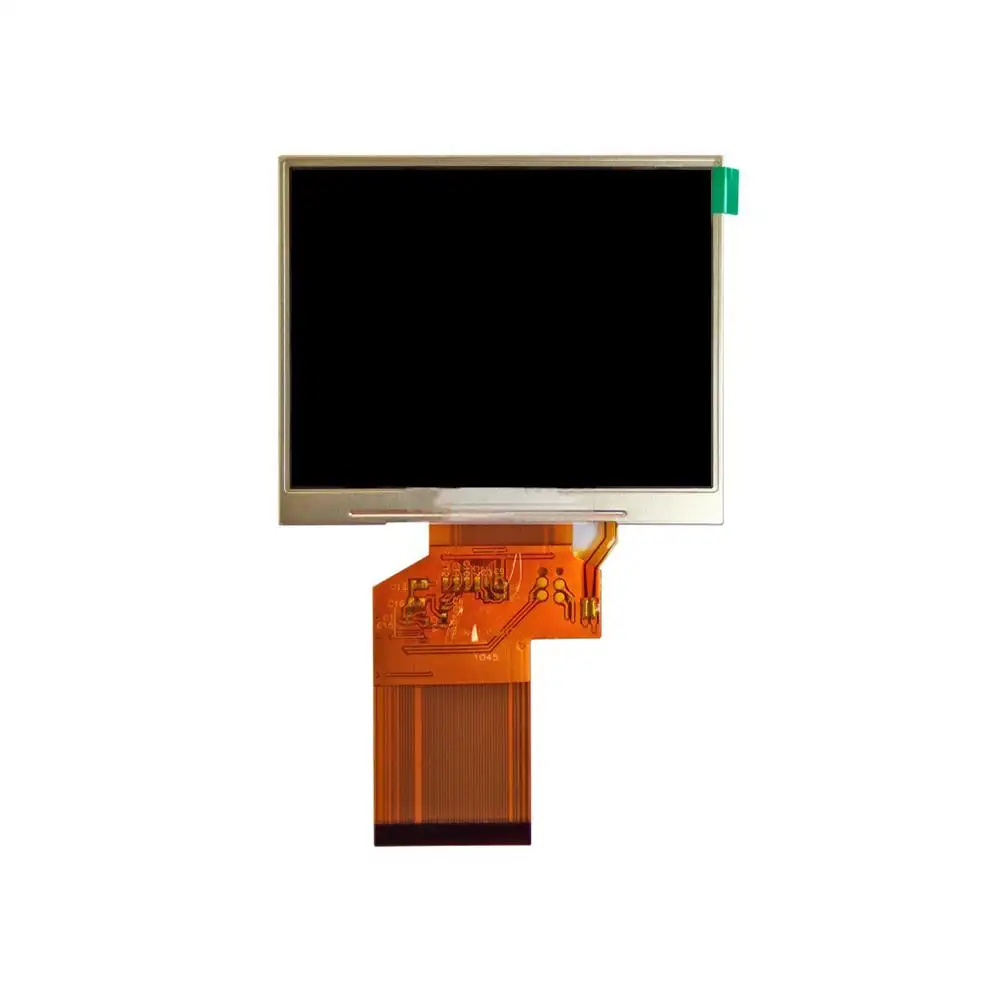
The LQ035NC111 LCD module was designed for compact equipment that requires basic graphics, menus, numerical data or video preview. However, selecting this panel requires more than matching the screen size and resolution. Interface timing, logic voltage, backlight driving, viewing direction, mechanical fit and production revision must all be verified before integration.
| Parameter | Specification |
| Display size | 3.45-inch diagonal |
| Market category | Commonly listed as 3.5 inch |
| Resolution | 320 RGB × 240 pixels |
| Aspect ratio | 4:3 |
| LCD technology | a-Si TFT active matrix |
| Display mode | TN, normally white, transmissive |
| Pixel arrangement | RGB vertical stripe |
| Active area | 70.08 × 52.56 mm |
| Module outline | Approx. 76.9 × 63.9 × 3.26 mm |
| Input formats | 24-bit RGB, serial RGB, CCIR601/656 |
| Backlight | WLED |
| Viewing direction | 6 o'clock |
| Operating temperature | −20°C to +70°C |
| Storage temperature | −30°C to +80°C |
| Touch panel | Not included as standard |
| Backlight driver | External circuit required |
Luminance should be confirmed against the datasheet revision and actual production batch. Some LQ035NC111 records indicate approximately 250 nits, while other revisions specify a typical value closer to 300 nits. For engineering approval, the panel label, datasheet version and measured sample performance should be reviewed together.
The LQ035NC111 display provides enough pixels for compact graphical interfaces without imposing the processing and memory requirements of a high-resolution panel.
Suitable content includes:
•Operating menus and status icons
•Numerical measurements and alarm messages
•Basic maps and navigation prompts
•Camera or video preview images
•Equipment settings and diagnostic information
•Simplified waveforms and trend graphics
The QVGA format is less suitable for dense text, detailed medical images or modern high-resolution user interfaces. Product designers should use larger fonts, high-contrast colors and simplified information layers.
The LQ035NC111 LCD module uses TN technology with a normally white, transmissive structure.
TN technology offers mature manufacturing, relatively fast response and practical cost control.
Normally white operation means incorrect signal polarity or missing data may produce a bright or washed-out screen.
Transmissive construction requires an active backlight and is primarily intended for indoor or controlled-light environments.
Compared with IPS panels, TN technology has narrower viewing angles and greater grayscale variation. The enclosure orientation should therefore be determined through physical sample testing.
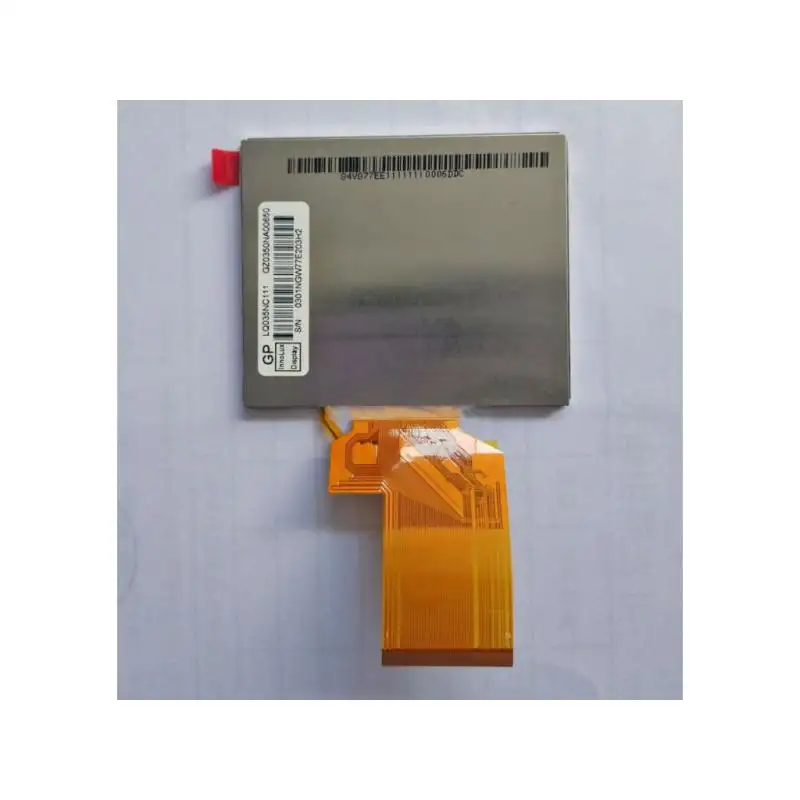
A major engineering feature of the LQ035NC111 is its support for several digital input formats. Depending on the operating configuration, the module can accept:
•24-bit parallel RGB
•Serial RGB
•CCIR601 digital video
•CCIR656 embedded-synchronization video
•SYNC timing mode
•DE plus synchronization timing
In parallel RGB mode, the host controller typically supplies DCLK, HSYNC, VSYNC, DE and RGB pixel data. The mode-selection pins must correspond to the intended interface format.
| Interface Item | Engineering Requirement |
| Pixel clock | Must remain within the panel timing range |
| HSYNC/VSYNC | Verify polarity, pulse width and porch periods |
| Data enable | Confirm DE-only or combined timing operation |
| RGB mapping | Check channel order and valid data bits |
| Logic level | Match the panel input-voltage specification |
| Mode pins | Set the correct video-input configuration |
| FPC connection | Confirm pinout, pitch and contact orientation |
| Signal integrity | Control ringing, skew and trace-length mismatch |
A built-in driver IC does not make the LQ035NC111 compatible with every MCU. The processor must include a suitable LCD controller and sufficient memory bandwidth to refresh a 320 × 240 frame continuously.
Controllers without a native RGB output may require an external display-controller IC. HDMI, VGA and CVBS sources also need an appropriate conversion board because they cannot drive the panel directly.
The LCD logic supply and WLED backlight should be treated as separate electrical subsystems.
Backlight design must consider:
•LED string forward voltage
•Regulated constant-current output
•Driver start-up voltage
•PWM dimming frequency
•Brightness-control range
•Power sequencing
•Battery-runtime impact
•Thermal dissipation
The LQ035NC111 includes the LED backlight structure but not a complete backlight driver. Connecting the LED string directly to an uncontrolled voltage source may cause inconsistent brightness, overheating or accelerated LED degradation.
PWM dimming should also be evaluated carefully. A low PWM frequency may produce visible flicker, while certain frequencies can create rolling bands when the screen is recorded by a camera.
The standard LQ035NC111 display should not automatically be described as sunlight readable. Its transmissive TN design is better suited to indoor equipment, vehicle interiors and controlled-light environments.
Outdoor readability may be improved through:
•Anti-glare or anti-reflective cover glass
•Optical bonding to reduce internal reflections
•A mechanical sunshade or recessed bezel
•High-contrast UI colors
•Reduced cover-lens air gap
•A higher-brightness replacement panel
The 6 o'clock viewing direction identifies the preferred observation side. Installing the LQ035NC111 LCD module in the wrong orientation can produce:
•Grayscale inversion
•Reduced contrast
•Color shifts
•Uneven image appearance
•Poor readability from the operator's normal position
Both landscape and portrait installations should be tested under realistic operating angles.
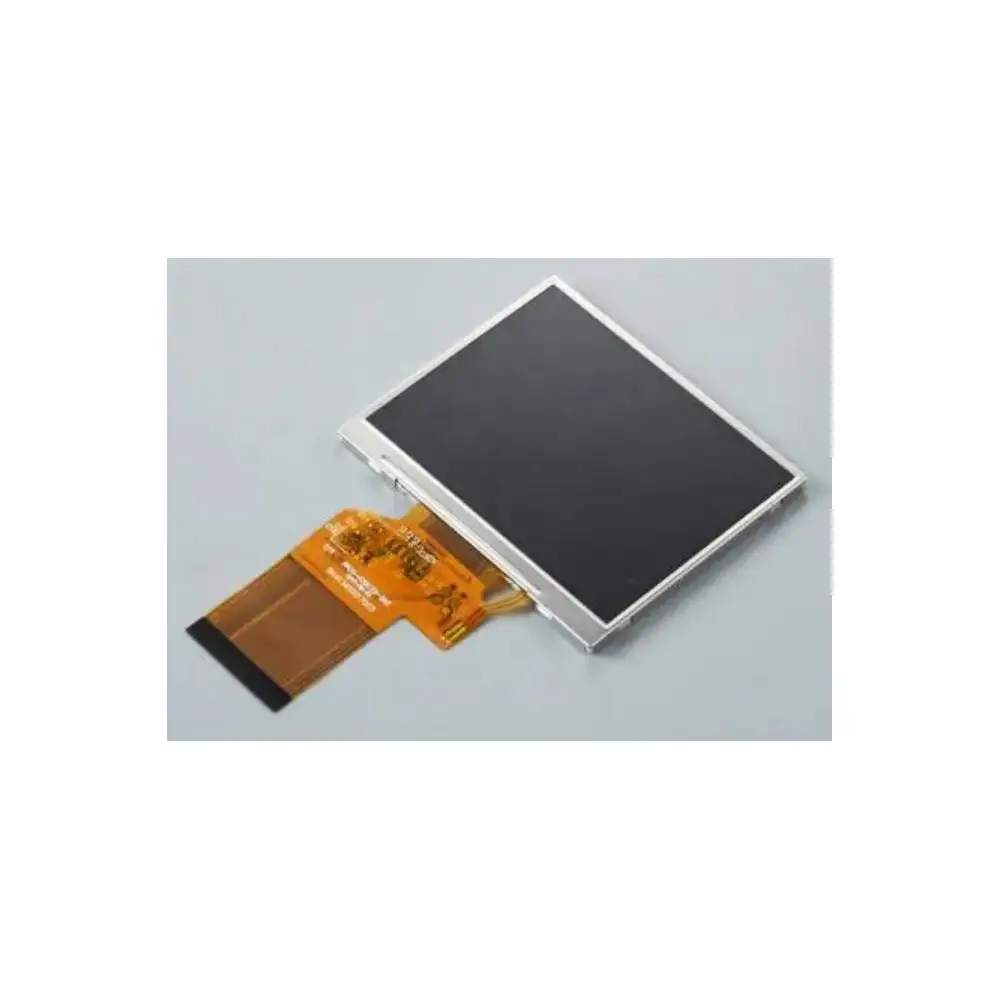
A replacement panel with the same size and resolution is not necessarily mechanically compatible with the LQ035NC111.
Engineers should verify:
•Module outline and thickness
•Active-area position
•FPC location and bending radius
•Connector type and contact side
•Bezel opening and overlap
•Rear-component clearance
•Cover-lens thickness
•Assembly pressure and tolerance
Uneven pressure on the panel can create light leakage, mura, cell-gap variation or permanent glass damage. The enclosure should secure the module without forcing the active area against the bezel.
| Application | Display Function | Main Engineering Concern |
| Portable navigation | Maps, menus and direction prompts | Ambient-light readability |
| Digital cameras | Image preview and settings | Color and viewing angle |
| Test instruments | Values, waveforms and alarms | Controller bandwidth |
| Security terminals | Video preview and system status | Signal conversion |
| Industrial HMI | Basic controls and maintenance menus | Lifecycle availability |
| Portable medical devices | Parameters and operating prompts | EMI and system validation |
| Legacy equipment | Original display replacement | Revision compatibility |
Use in automotive, industrial or medical equipment does not automatically mean the LQ035NC111 has application-specific certification. Environmental, EMC, safety and regulatory requirements must be evaluated at the complete-system level.
Before approving the LQ035NC111 or a compatible replacement, confirm:
•Exact panel model and revision
•RGB or digital-video input format
•Pixel-clock and synchronization timing
•Logic voltage and pin assignment
•Backlight voltage and current
•Active area and external dimensions
•FPC routing and connector orientation
•Viewing direction and brightness
•Operating-temperature requirements
•Supply status and batch consistency
A 3.5-inch 320 × 240 LCD is not automatically a drop-in LQ035NC111 replacement. Electrical, optical and mechanical compatibility must be reviewed together.
The LQ035NC111 is a mature compact TFT LCD for QVGA interfaces, basic graphics, video preview and legacy equipment support. Its multiple digital input modes provide design flexibility, but successful integration depends on correct timing, signal mapping, backlight driving, mechanical installation and viewing-angle validation.
For an LQ035NC111 integration, maintenance or replacement project, FaceLCD can review the panel drawing, host-board signals, backlight requirements and enclosure dimensions. Providing the existing panel label, connector details and target quantity allows FaceLCD to perform a practical compatibility review and arrange sample evaluation.
Q1. Can FaceLCD add a touch panel to the LQ035NC111?
A resistive or projected capacitive touch panel may be evaluated for the LQ035NC111, depending on the cover-lens structure, available installation space and operating requirements. Touch integration can change the total thickness, brightness, reflection and mechanical tolerances.
Q2. Can FaceLCD help verify whether an LQ035NC111 is original?
FaceLCD can check the panel label and the packaging. They can also check the structure of the FPC, the connectors and any trace they may have. We recommend checking a sample if the authenticity, the production revision, or previous storage conditions are critical to the project.
Q3. Does FaceLCD provide an LQ035NC111 replacement solution?
If the original LQ035NC111 is either not available or not suitable for longer supply, FaceLCD can check the compatible replacement options. The replacement review entails checking the resolution, active area, outline dimensions, interface timing and pin assignment, as well as the backlight and the viewing direction.
Q4. What information does FaceLCD need to evaluate LQ035NC111 compatibility?
Customers will need to provide the following:
•Existing LCD model and label photos;
•The original panel drawing or datasheet;
•The host-board interface and signal timing;
•The connector and FPC information;
•The outer dimensions of the enclosure;
•The specifications for the backlight driver;
•The requested quantity and information on the use environment.
These will help minimize the risk of incompatibility prior to sampling.
Q5. Can FaceLCD provide a controller board for the LQ035NC111?
FaceLCD can check the feasibility of a controller-board solution for the LQ035NC111. If the input source is HDMI, VGA, CVBS or other signals, a controller or conversion board is required. These signal sources cannot drive the LQ035NC111 panel directly.